
Last updated September 20, 2026
Full 25-point door and opener safety check with every visit - springs, cables, rollers, tracks, and your LiftMaster or Chamberlain opener included
You get a price before we start. It does not change when the truck arrives.
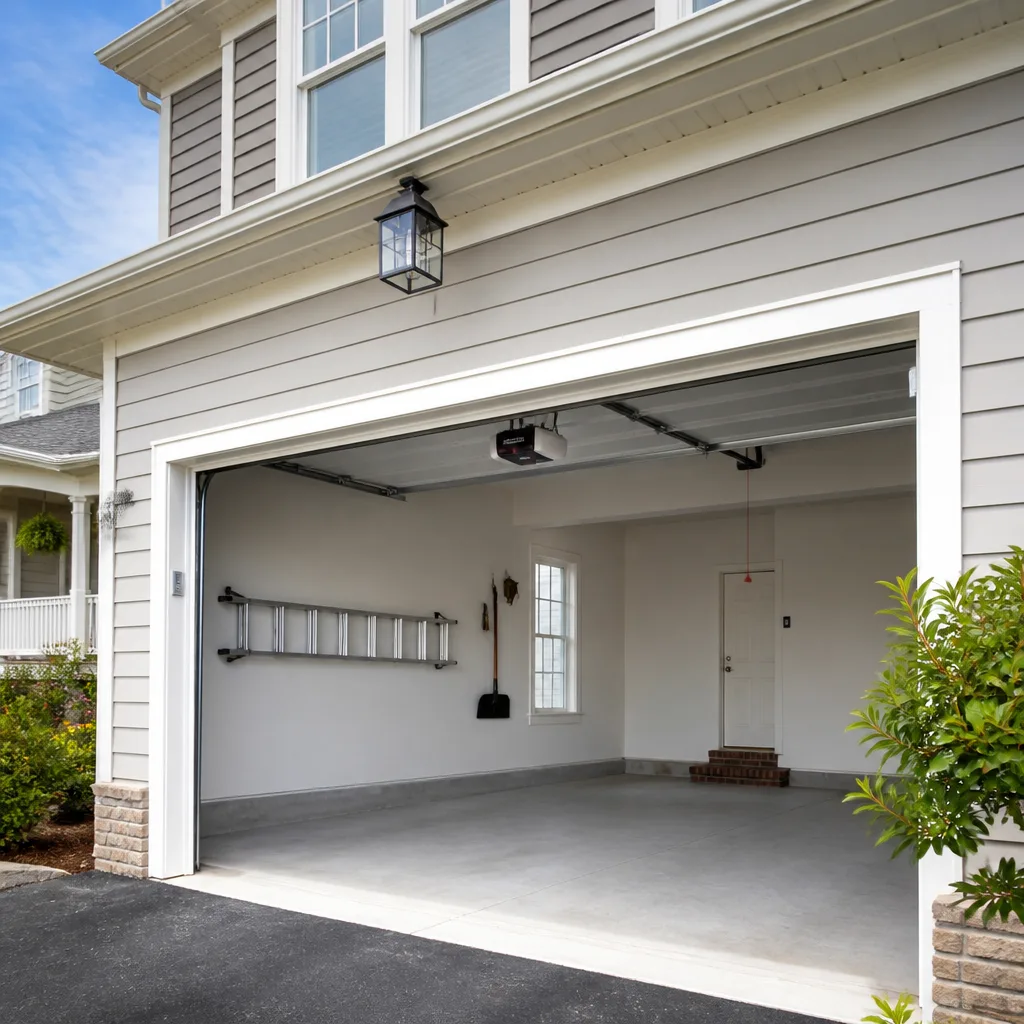
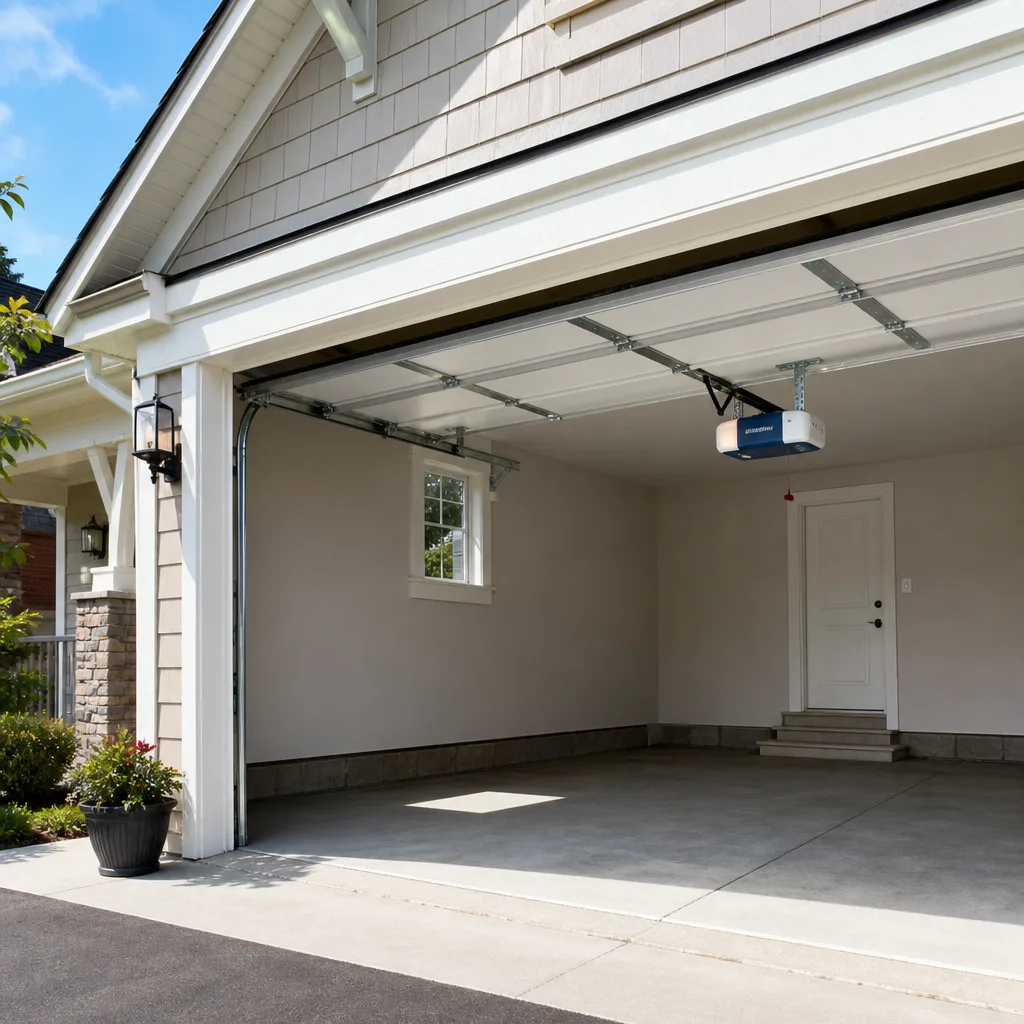
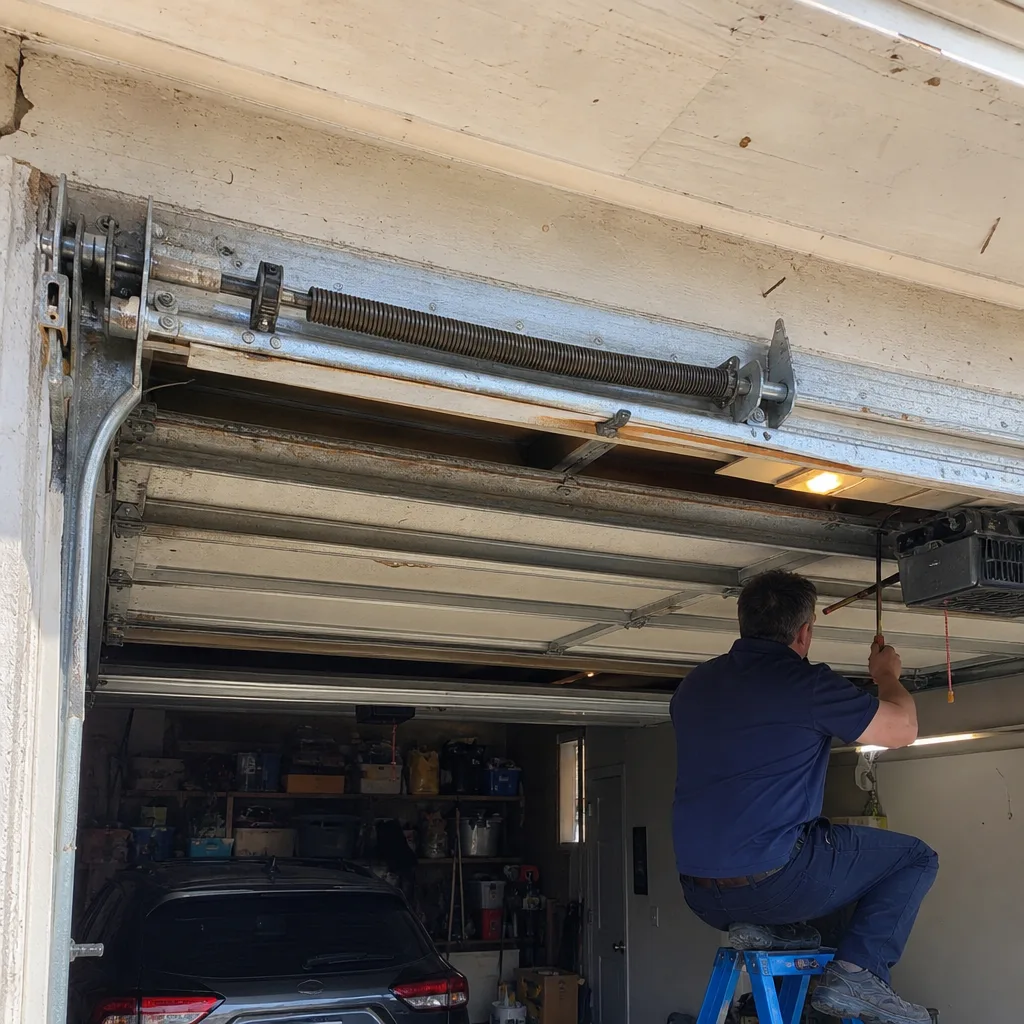 Before
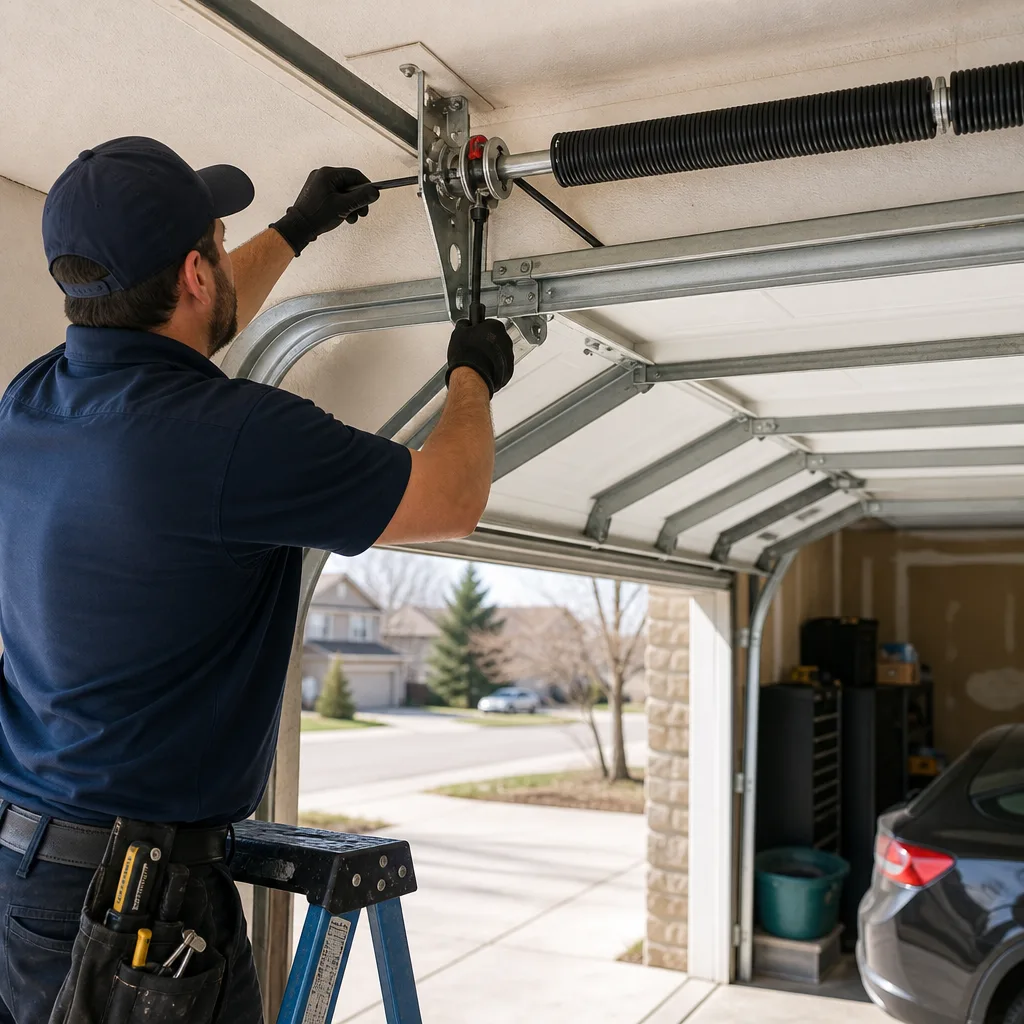 After
After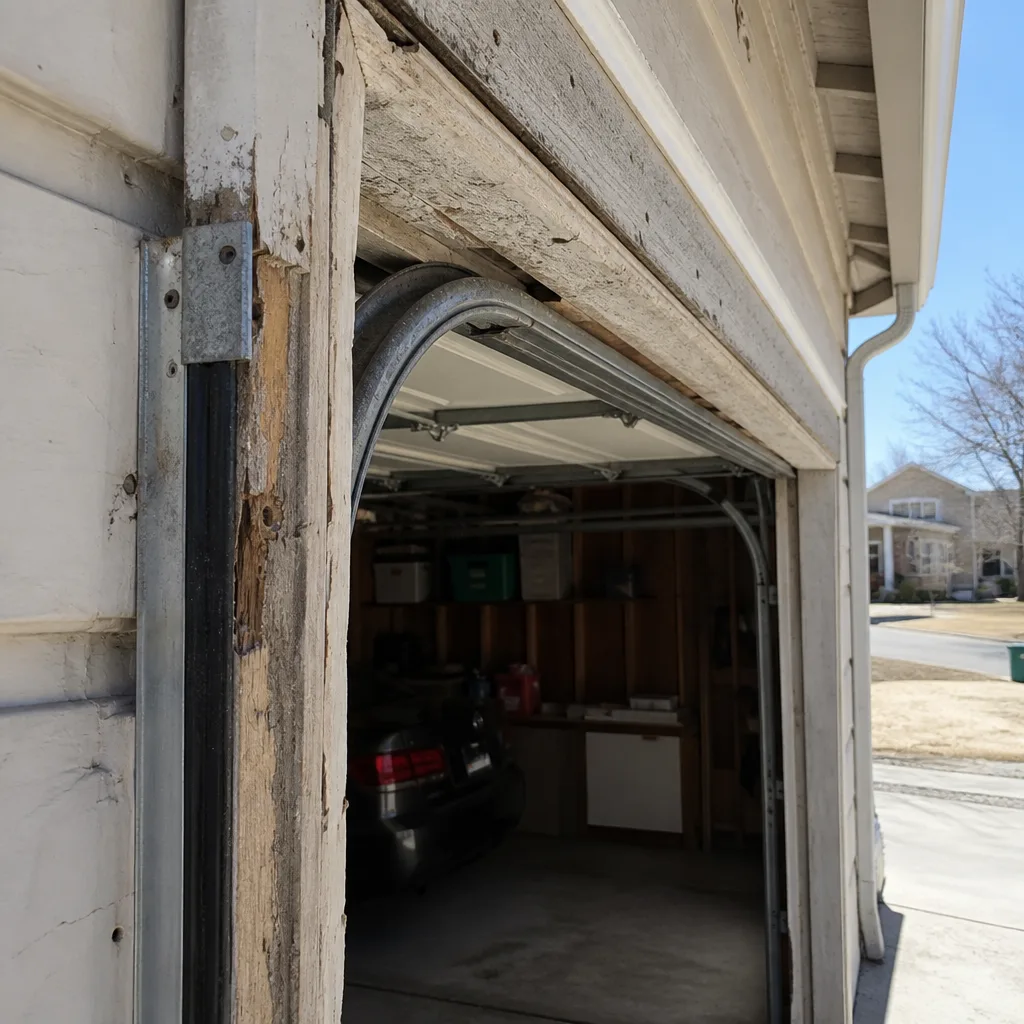 Before
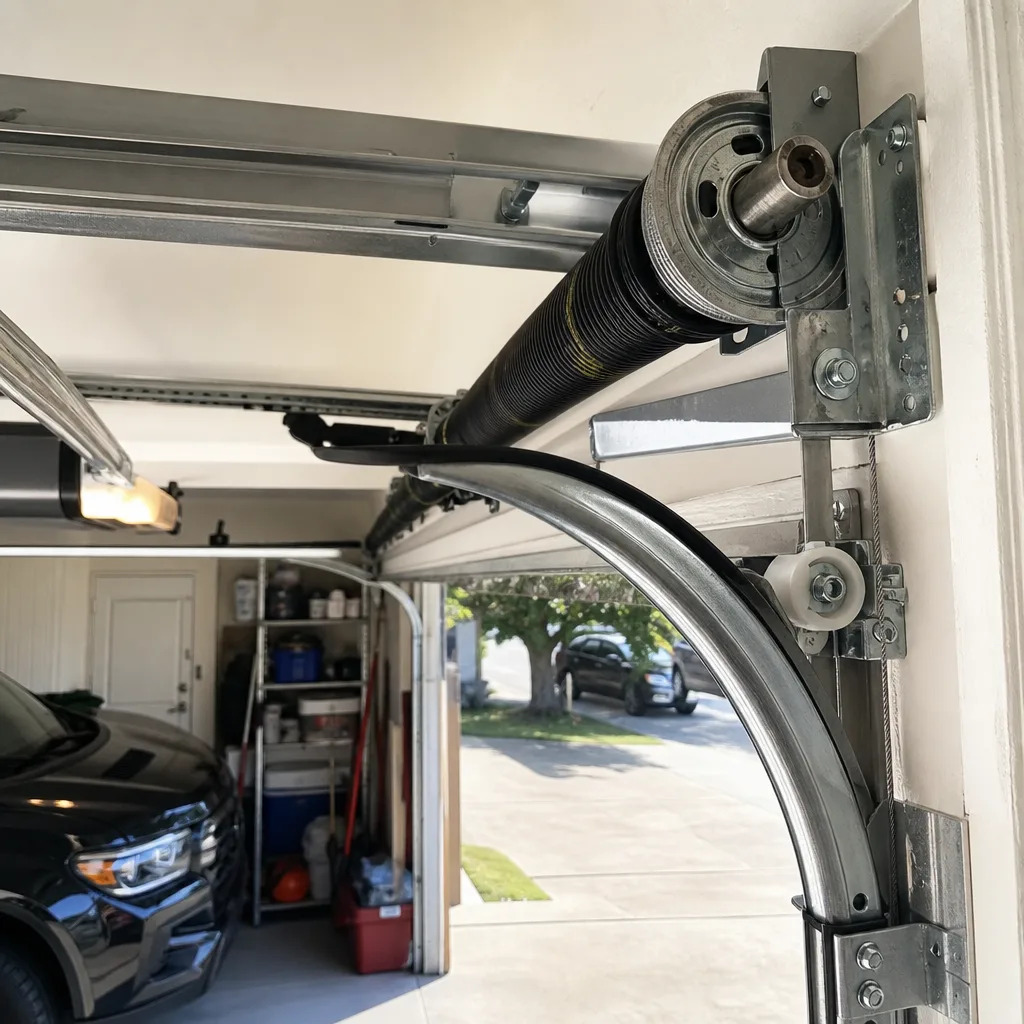 After
After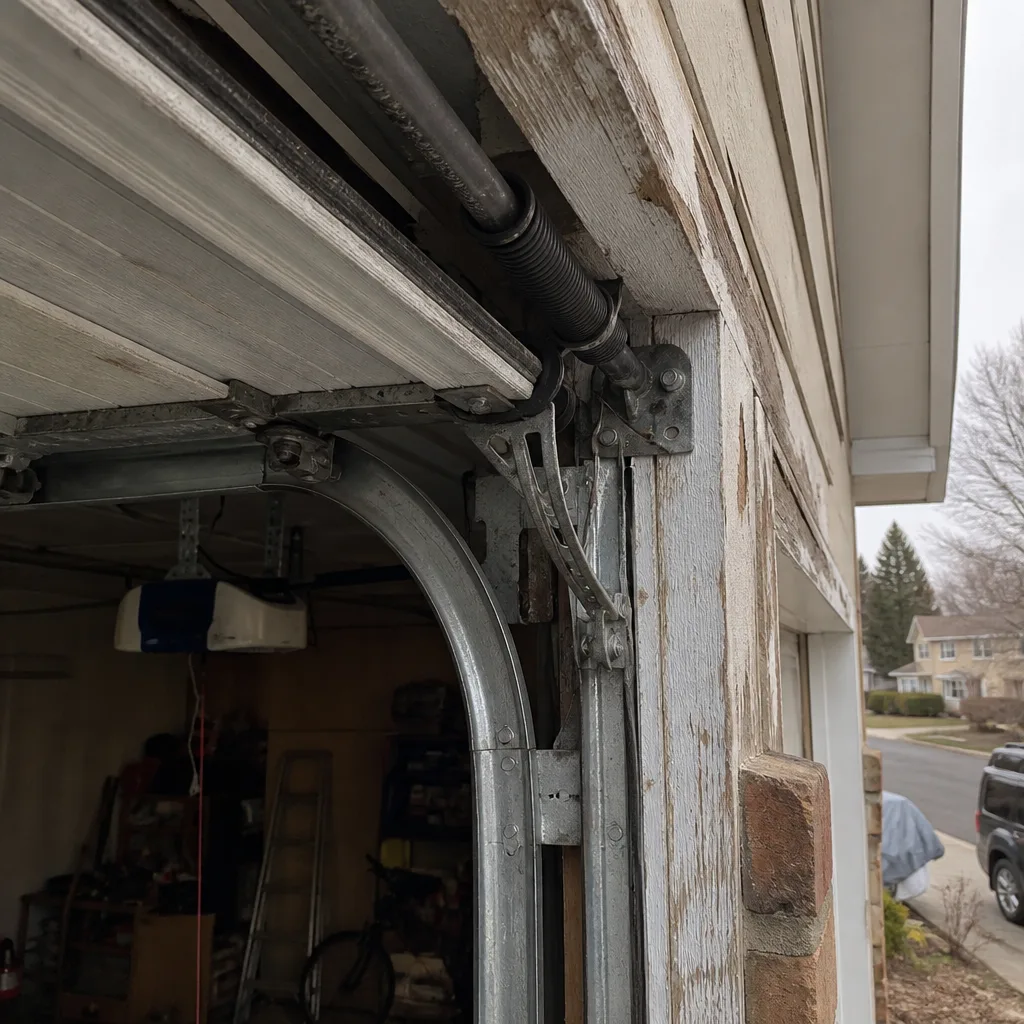 Before
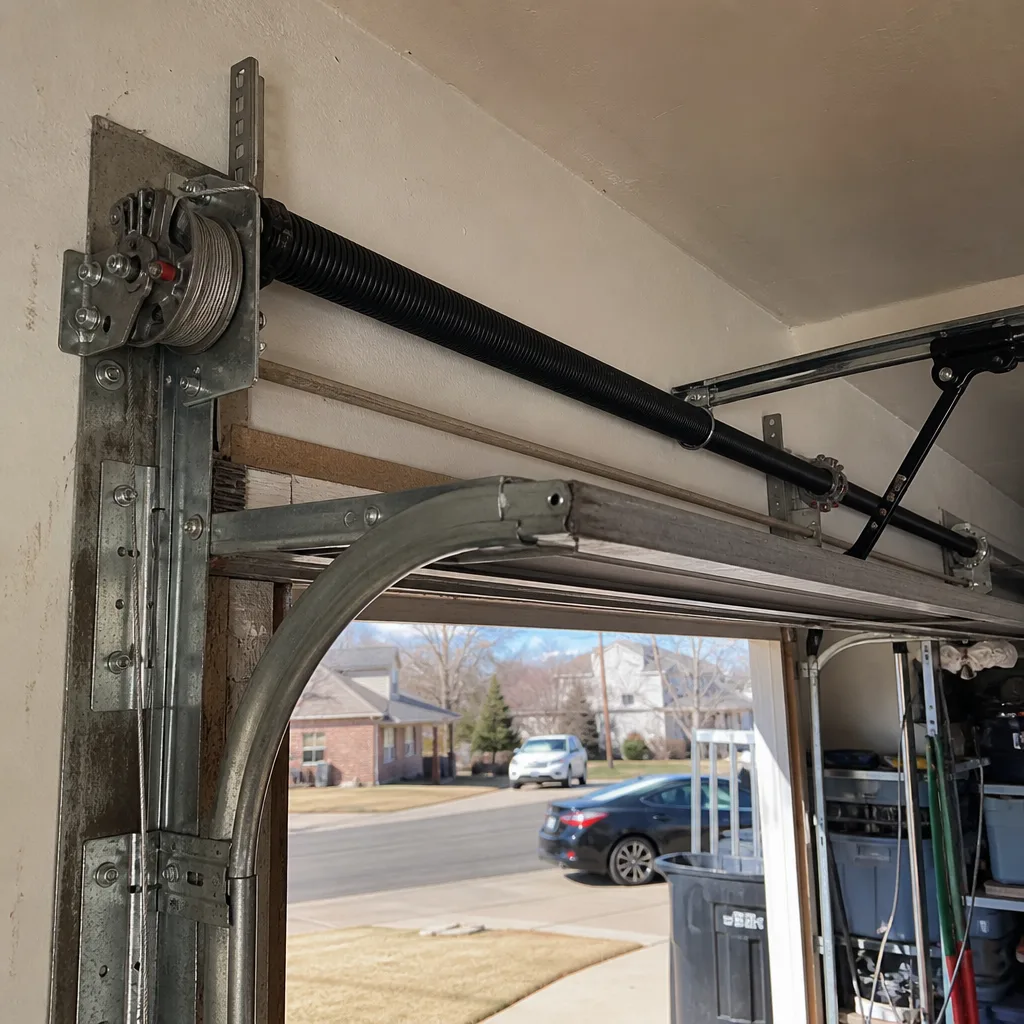 After
AfterSeasonal Garage Door Care for Thornton: Year-Round Homeowner’s Guide
Spring in Thornton can deliver a 70°F afternoon followed by a hard freeze overnight. That thermal cycling contracts and expands metal hardware faster in six weeks than a full stable winter does in four months, and it’s the reason we see more torsion spring failures between March and May than in any other stretch of the year. This guide-along with our Complete Guide to Garage Door in Thornton-explains what that means for your door, which tasks matter most in each season, and how to build a care calendar that actually matches Thornton’s weather instead of a generic template. You’ll learn what to inspect, when to do it, what you can handle yourself, and what to leave alone for safety reasons.
Quick Answer
Seasonal garage door maintenance in Thornton should be front-loaded to spring, not spread evenly across the year. The rapid temperature swings from March through May cause metal contraction and expansion that fatigues springs, loosens hardware, and throws off balance faster than any other season. A homeowner who does two focused checks per year, one in April and one in October, plus a few ten-minute walk-arounds in between, will catch most failures before they become emergencies.
Table of Contents
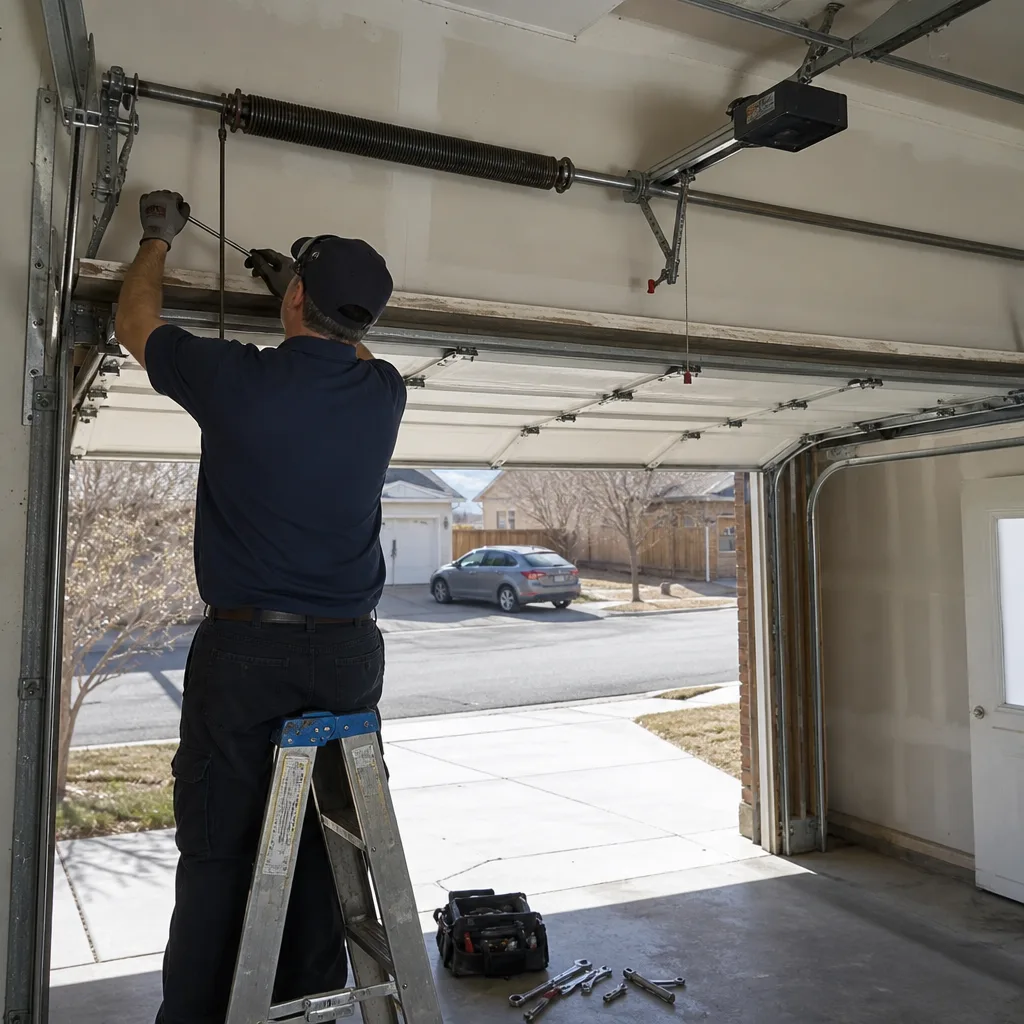
- Why Thornton’s Weather Is Harder on Garage Doors Than You Think
- Spring Maintenance: The March Through May Window That Matters Most
- The Balance Test: What Cold Contraction Does to Torsion Spring Tension
- Summer Maintenance: UV, Seals, and Colorado’s Altitude Sun
- Fall Maintenance: The October Cable and Drum Inspection
- Winter Maintenance: What to Do When the Door Freezes
- What Seasonal Garage Door Care Costs in Thornton
- Common Mistakes to Avoid
- When to Call a Professional
- Frequently Asked Questions
- The Bottom Line
BeforeAfterWhy Thornton’s Weather Is Harder on Garage Doors Than You Think
Thornton sits at roughly 5,300 feet of elevation with a semi-arid climate, which means three things for garage door hardware: intense UV exposure, wide daily temperature swings, and freeze-thaw cycles that don’t happen in more temperate cities. The daily swing between afternoon high and overnight low averages 25 to 30 degrees year-round, and in spring it can reach 45 degrees or more. Metal expands when warm and contracts when cold. A 30-foot chain on a Chamberlain opener changes length by a measurable amount across that swing. A torsion spring’s wire diameter changes infinitesimally, but the cumulative stress of thousands of those cycles is what eventually snaps the coil.
Most homeowners assume winter is the hard season. It isn’t. A door that sits in stable cold for weeks at a time experiences one contraction event and then holds. A door in March and April experiences dozens of expansion-contraction cycles in the same month. That’s why we tell Thornton homeowners to think of spring as the real test season. If something is close to failing, spring will find it.
Thornton’s soil also plays a role. The clay-heavy ground expands when wet during snowmelt and spring rain, then shrinks during dry summer months. That movement shifts the concrete pad your garage door sits on, which can change the gap at the bottom seal and throw off the alignment between the safety sensors. It’s subtle, but in neighborhoods around Hunters Glen and Thorncreek, we’ve seen doors that passed a sensor test in September fail one in April because the pad shifted a quarter inch.
The practical takeaway: maintenance in Thornton is not about doing the same four tasks every season. It’s about doing the right tasks at the right time, with the heaviest lift in March through May. This guide follows that logic.
Spring Maintenance: The March Through May Window That Matters Most
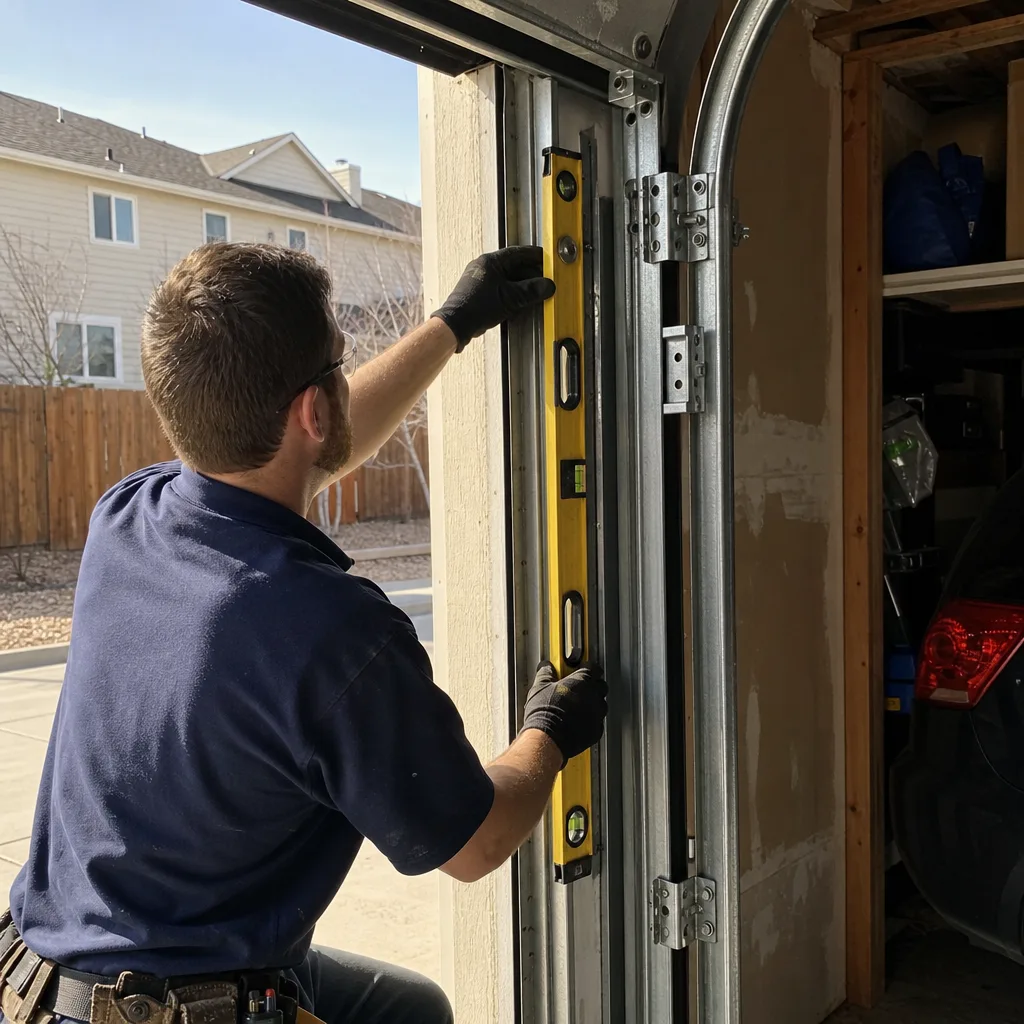
This is your highest-intervention season in Thornton. If you only do one thorough garage door check per year, do it in April. Here’s the full spring task list, in order of importance:
- Run the balance test. Pull the emergency release cord and lift the door manually to waist height. It should stay put. If it drops, the torsion spring tension is off. If it rises, the spring is over-wound. Either condition makes your opener motor work harder than it should and shortens the life of every component in the chain. This test takes two minutes and tells you more than any visual inspection.
- Tighten every bolt, nut, and lag screw you can see. Thermal cycling loosens hardware. Pay special attention to the track brackets mounted to the wall, the hinges between door panels, and the bolts on the spring anchor bracket above the door. Use a socket wrench, not pliers. A quarter turn of slop at the bracket becomes visible door wobble within a month.
- Inspect the torsion springs visually. Look for a gap in the coil, which means a clean break. Look for rust that goes deeper than surface discoloration, which means active corrosion. If you see either, stop using the door and call a professional. Torsion springs under tension store enough energy to cause serious injury when they fail.
- Check the bottom seal for winter damage. Snowmelt and ice in Thornton can freeze the seal to the concrete and tear it when the door opens. Shine a flashlight from outside while the door is closed. If you see light coming through, water, insects, and cold air are coming through too.
- Clean and lubricate the rollers and hinges. Wipe off old grease and grime with a rag, then apply a silicone-based lubricant to the roller bearings and hinge pins. Do not grease the track itself. A greasy track collects dust and causes the rollers to slip.
- Test the auto-reverse safety feature. Place a 2×4 flat on the ground under the door and close it. The door should reverse within two seconds of contacting the wood. If it doesn’t, the opener’s force setting is too high. This is a safety issue, not a performance issue.
Spring is also the season when we recommend a professional tune-up if you haven’t had one in two years or more. The Garage Door Repair in Thornton page covers what a typical service visit includes, but the short version is a full hardware torque check, spring tension adjustment, and a written photo record of everything found.
Winter’s Leftover Problem: What Cold Contraction Does to Torsion Spring Tension
A torsion spring works by storing mechanical energy when the door closes and releasing it when the door opens. The spring is wound to a specific tension at installation, and that tension is calibrated to the door’s exact weight. When a door is properly balanced, the opener motor only needs to provide about 10 percent of the effort. When the spring loses tension, the motor does more of the work, and the opener’s gears, sprocket, and logic board all wear out faster.
Here’s what happens during a Thornton winter. Cold air causes the spring’s steel wire to contract slightly, which technically increases tension in the short term. But cold air also makes the grease inside the bearings and the torsion tube thicker, which increases rolling resistance. The combined effect is a door that runs stiff in January even when the spring is fine. Then spring arrives, the grease thins out, and the metal expands. The tension drops back. If the spring was already fatigued, that drop is enough to shift the balance point and put the opener motor into overdrive.
In our experience, a door that balanced perfectly in September and pulls the opener motor by January usually has a spring that’s lost five to ten percent of its original tension. It’s not a dangerous failure yet, but it’s a wearing one. The opener’s limit switches start hunting, which is the technical term for the motor overshooting the closed position and reversing slightly. You can hear it: the door closes, thuds, then briefly reverses without opening. That’s a motor compensating for a spring that isn’t doing its share.
The fix is a tension adjustment, but this is not a DIY task. Torsion springs are under constant load, and the winding bars used to adjust them can slip and cause serious injury. Our technicians at Servo Garage Doors Thornton home adjust springs with the door in the down position, using correct-length winding bars and a controlled slow-wind procedure. It takes a professional about twenty minutes and it’s the single highest-leverage maintenance item on this page.
If you have a Genie or Chamberlain opener that’s older than seven years, the strain of a misbalanced door tends to show up as stripped gears first. We see it in Thornton regularly: the opener motor runs, but the chain or belt doesn’t move. The plastic gear inside the opener housing shears off because it was doing the spring’s job for months. A spring adjustment in March costs a fraction of what an opener replacement costs in July.
Summer Maintenance: UV, Seals, and Colorado’s Altitude Sun
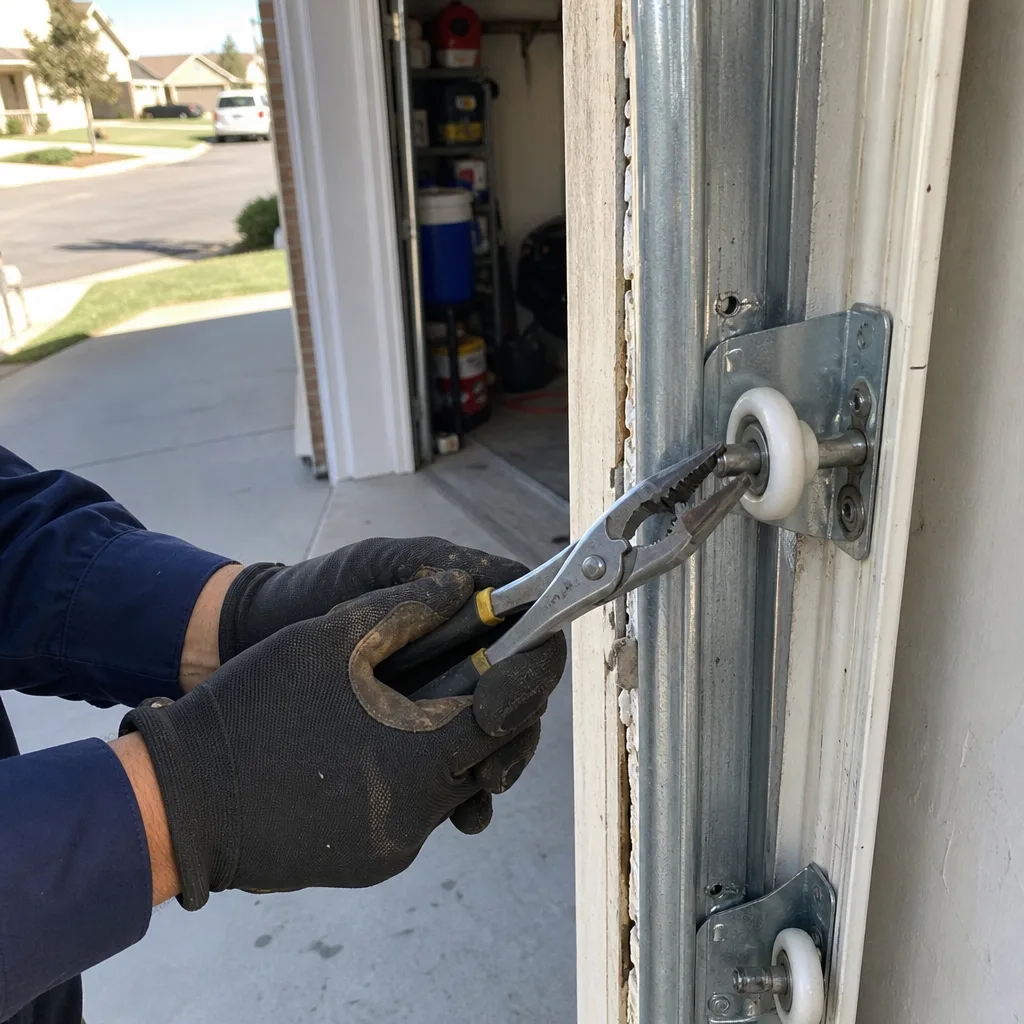
Thornton’s high-altitude sun is harder on rubber and vinyl than most homeowners expect. UV exposure at 5,300 feet is measurably more intense than at sea level, and the specific wavelengths that degrade polymers are less filtered by the thinner atmosphere. The practical result is that garage door bottom seals and weatherstripping in Thornton typically last four to six years, compared to eight to ten in coastal climates.
Summer is the season to inspect and, if needed, replace these cheap but critical components:
- Bottom seal (also called an astragal). This is the rubber strip that runs along the bottom edge of the door. UV makes it brittle, and brittle rubber cracks when the door flexes. A cracked seal lets in summer heat, dust, and insects. Replacement seals cost $25 to $60 for the part, and most homeowners can replace a T-style seal themselves in fifteen minutes.
- Perimeter weatherstripping. This is the vinyl strip mounted to the door frame on the sides and top. UV fades it, and repeated opening and closing compresses it. When it loses its spring-back, it stops sealing. You’ll see daylight around the door edges from inside the garage. Replacement weatherstripping runs $1 to $3 per linear foot, and it’s a straightforward replacement with a utility knife and a hammer.
- Panel seals between door sections. On sectional doors, small rubber strips between panels keep rain out of the seams. These take direct UV on the bottom edge of each panel. If they’re cracked or missing, water gets into the door core in winter and can freeze, delaminate steel panels, or rust the interior hardware.
Summer is also the season to inspect the door itself for signs of UV damage on the paint or powder coat. Faded paint is cosmetic, but chalking paint that comes off on your hand means the metal underneath is exposed. Touching up exposed steel before autumn prevents rust from getting a foothold before winter moisture arrives. For doors from Amarr or Clopay with a factory finish, a matched touch-up kit runs $20 to $40 and extends the door’s life by years.
One more summer item specific to Thornton: dust. The semi-arid climate means fine dust gets into everything, including your opener’s optical safety sensors. A dusty sensor reads as an obstruction and causes the door to reverse when no obstruction is there. Wipe both sensors with a dry cloth once a month during dusty months. If you’re dealing with a persistent sensor issue, the Garage Door Opener Repair & Installation in Thornton page covers common causes and costs.
Fall Maintenance: The October Cable and Drum Inspection
October is the second-focal-point month on the Thornton care calendar, and the task list is shorter but arguably more critical than spring’s. Here’s the logic: once winter sets in, the overhead door becomes the boundary between your heated home and single-digit cold. If the door fails in January, you’re not just inconvenienced, you’re exposing your home to freezing temperatures and potentially burst pipes in the garage wall. The October check is about making sure the door will work when you need it most.
Here’s the October task list, in order of importance:
- Inspect the lift cables and drums. This is the one task to complete before winter, not in winter. The cables are the steel wires that run from the bottom brackets up to the drums on the torsion tube. In October, look for fraying, kinks, or rust spots. Look at the drums, the grooved wheels the cables wrap around, and make sure the cable is seated cleanly in the groove. A cable that’s begun to slip out of its groove will fail under the extra load of manual winter operation, and a snapped cable sends the door down unevenly and dangerously.
- Test the door manually. A power outage in a Colorado winter storm is not rare, and during an outage you’ll operate the door by pulling the red emergency release cord and lifting it yourself. Do a test run in October. If the door is hard to lift, the spring tension is off and the door needs adjustment. If the door binds halfway up, the tracks or rollers need attention. Fixing this in October costs a service call. Discovering it in January during an outage costs the same service call plus whatever broke while the door was forced.
- Check the garage door threshold seal. The threshold seal is a rubber strip mounted to the concrete floor under the door. Its job is to create a tight barrier against water and snowmelt. Thornton’s wet spring soil conditions start with snowmelt, and if water pools against the door and seeps under the threshold, it gets into the garage and rusts the bottom panel from the inside. Check for gaps, cracks, or lifting. A threshold seal replacement runs $40 to $80 for the part, and installation takes about an hour.
- Lubricate moving parts one final time before cold weather. Use a silicone-based lubricant on hinges, rollers, and the torsion spring itself. Cold weather thickens grease, and a properly lubricated door runs noticeably smoother in January than a dry one.
- Clear the area around the door. This sounds obvious, but snow shovels, bags of salt, and holiday bins migrate into the garage in October and November. They end up under the door path. If you store anything near the door, mark a no-parking zone with tape so items don’t block the safety sensors or get crushed by the closing door.
If you catch cable fraying in October, the fix is a cable replacement, usually $120 to $180 in Thornton including the service call. If you catch it in January during an emergency, the same job costs $200 to $300 because the technician is doing the work in the cold and on a faster timeline. The October inspection is the best insurance against the January surcharge.
Winter Maintenance: What to Do When the Door Freezes
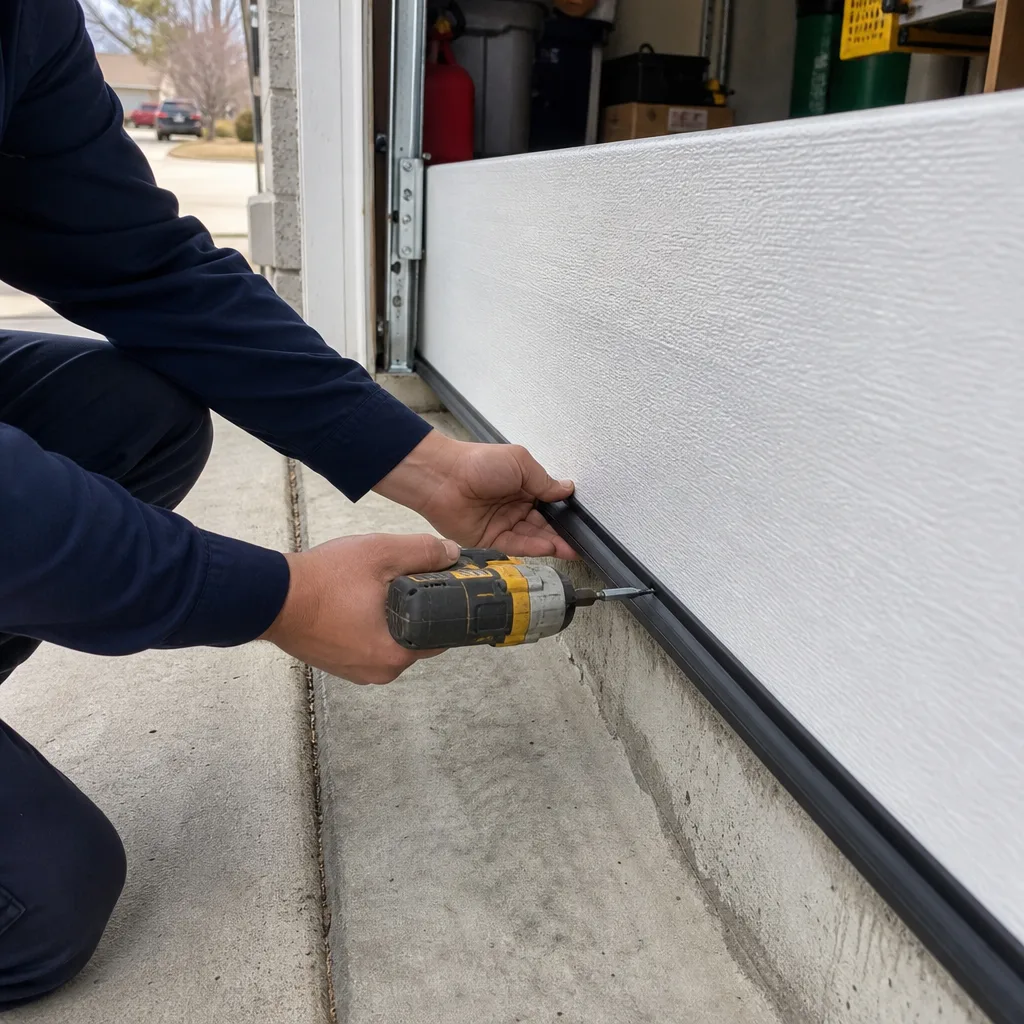
Here’s the honest truth about winter maintenance in Thornton: if you did the spring balance check and the October cable inspection properly, winter requires almost nothing from you. The door is a mechanical system, and mechanical systems that are properly tensioned, lubricated, and sealed run fine in cold weather. The problems that show up in winter are almost always problems that existed in October and weren’t caught.
That said, winter does present two seasonal issues specific to Thornton’s freeze-thaw pattern:
The frozen door syndrome. After a snowstorm, meltwater runs under the door and freezes overnight, gluing the bottom seal to the concrete. The opener motor strains against the frozen seal, and if the force setting is too high, the motor can burn out or strip a gear before the seal breaks free. If you suspect the door is frozen shut, don’t hit the opener button and walk away. Pull the manual release, try to break the seal with a flat shovel, and only then operate the door. If you’re not comfortable doing this, call before you force it. The cost of a service call is less than a new opener motor.
The shrinking-clearance problem. Steel contracts in cold weather, and the clearance between the door and the tracks shrinks slightly. A door that ran with a quarter inch of clearance in August might run tight in January. If the door sounds louder than normal or scrapes on the way up, the tracks may need a minor adjustment. This is typically a $90 to $150 adjustment call, and it’s worth doing rather than letting the door bind and damage the track.
For winter emergencies, Servo Garage Doors Thornton answers the phone 24/7 with a live person. The number is (720) 575-1024. We’ll send a technician with the parts truck, and you’ll get a written price before any work starts.
What Seasonal Garage Door Care Costs in Thornton
Here’s a straight answer to the pricing question, because we know it’s the one you actually want answered. For deeper detail, see our Garage Door Cost Breakdown: The Thornton Homeowner’s Reference for 2026. These are line-item ranges for the most common seasonal maintenance tasks in Thornton, based on what we charge and what we see from competitors in the north Denver metro:
| Service | Typical Cost in Thornton | When to Do It |
|---|---|---|
| Full garage door tune-up | $89 - $149 | Spring (March-May) or fall (October) |
| Torsion spring tension adjustment | $80 - $120 per spring | Spring, if balance test fails |
| Bottom seal replacement | $75 - $150 installed | Summer, if UV-cracked |
| Perimeter weatherstripping replacement | $60 - $120 installed | Summer, if daylight visible around edges |
| Cable replacement | $120 - $180 per cable | October, if fraying found |
| Drum inspection and reseating | $70 - $110 | October, with cable check |
| Threshold seal replacement | $40 - $80 for part, $100 - $160 installed | Fall, before snowmelt season |
| Sensor cleaning and alignment | $60 - $90 | Summer, if door reverses randomly |
Every one of these prices is a flat quote we give before touching the door. That’s Clause 1 of The Haven Standard: a written price and written scope before any work starts. No exceptions, no ‘we’ll see when we get in there.’ If a technician from any company, ours included, quotes you a range and then changes it after the work begins, you have grounds to walk away.
If you’ve already got a written estimate from another company, bring it to us. We’ll give you a Free Second Opinion, and if the scope is accurate we’ll tell you so, even if it means you go back to them. That’s how the paper trail works.
Common Mistakes to Avoid
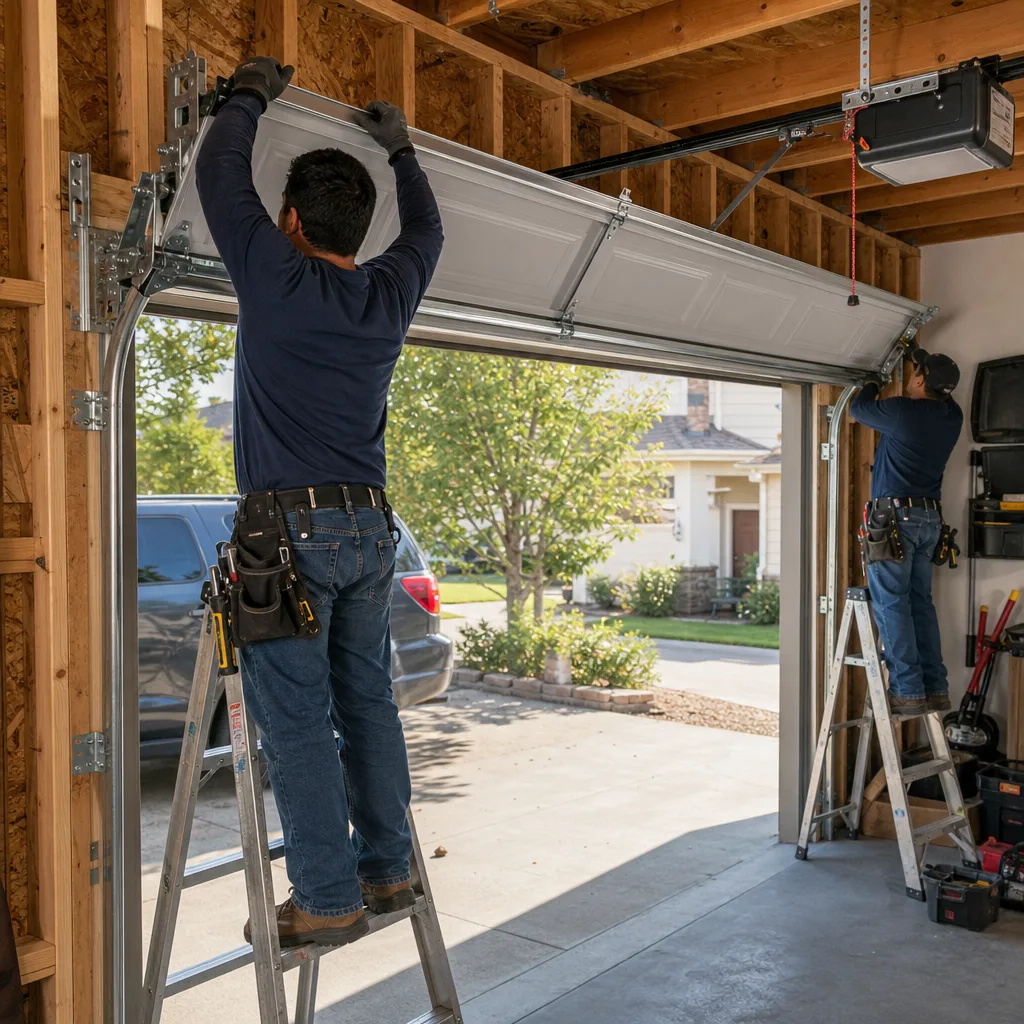
- Ignoring the balance test for years. A door that’s off balance still opens and closes, right up until the opener motor burns out. The balance test takes two minutes and catches the most expensive failure earliest. Do it every April and every October.
- Greasing the tracks. Garage door tracks are not rails for greased wheels. They’re guide channels. Grease on the track collects dust and grit and causes the rollers to bind. Lubricate the roller bearings and hinges only.
- Forcing the door open when it’s frozen to the ground. The opener motor will keep pulling until something breaks. If the door resists, stop, break the seal manually, and check for damage before running the opener again.
- Doing your spring and cable inspection but not writing down what you found. Memory is unreliable across seasons. Keep a note on your phone: date, what you checked, what you found. When something changes, you’ll know whether it was gradual or sudden, and that distinction matters for diagnosis.
- Waiting to fix a frayed cable because “it’s still holding.” A cable with one broken strand is a cable on a countdown. When it fails, the door slams down on one side, and the damage is never limited to the cable itself.
- Skipping the auto-reverse safety test. This is the test where the door reverses when it hits an obstruction. If it fails, the door can close on a person, a pet, or a car. The test takes one 2×4 and two minutes. Do it twice a year.
- Using WD-40 on garage door springs and rollers. WD-40 is a water displacer, not a lubricant. It cleans, then it evaporates, and the parts run dry. Use a silicone-based garage door lubricant from any hardware store.
When to Call a Professional
Some garage door maintenance is safe and simple: tightening bolts, cleaning sensors, lubricating hinges, replacing weatherstripping. Other tasks are dangerous, and no homeowner should attempt them. See our DIY vs Professional Garage Door: The Thornton Homeowner’s Decision Guide for a full breakdown. Torsion spring adjustment or replacement is at the top of that list. The springs are wound under high tension, and an uncontrolled release can break a jaw or worse. The same applies to cable replacement. Both involve working with the parts that hold the door’s weight, and both are jobs for a trained technician.
Call a professional if your door is off balance and you don’t know why, if you see a gap in the torsion spring coil, if you hear grinding or popping from above the door, if the opener runs but the door doesn’t move, or if you see fraying on the lift cables. Servo Garage Doors Thornton offers free estimates in Thornton, and we document everything with photos before and after. Call (720) 575-1024.
Frequently Asked Questions
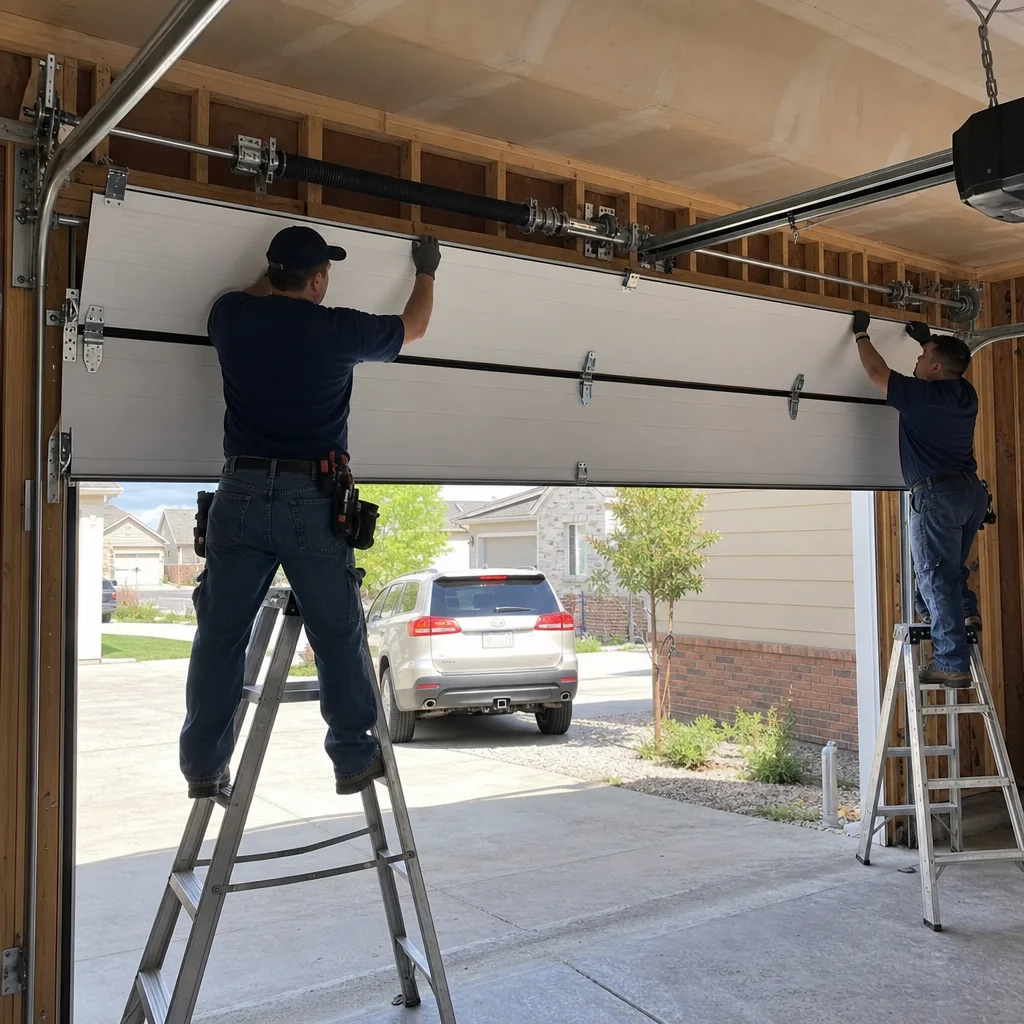
A full garage door tune-up in Thornton typically costs between $89 and $149, which covers a hardware torque check, spring tension adjustment, lubrication, and a written photo record of findings. Individual tasks like seal replacement or cable inspection cost $60 to $180 depending on the part and the work involved. Every Servo Garage Doors Thornton quote is a flat, written price delivered before any work starts, so the price you’re quoted is the price you pay. Call (720) 575-1024 for an exact quote.
Twice a year is the right cadence for Thornton: once in spring for balance and lubrication, once in October for cable and drum inspection. The spring service catches thermal-cycling damage from March through May, and the fall service prevents winter failures. If your door is older than ten years or you notice changes in how it runs, add a third inspection mid-summer.
The two most common winter garage door problems in Thornton are frozen bottom seals after snowmelt refreezes overnight and stiff operation from thickened lubricant in cold temperatures. Both are preventable: check and replace the bottom seal in summer before it hardens, and lubricate hinges and rollers in October with a silicone-based product that stays fluid in cold weather.
Yes. Servo Garage Doors Thornton runs a fully stocked parts truck and a 24/7 live line, and for most repairs we can dispatch a technician the same day. You’ll get a flat, written price before any work starts, and the technician will bring the parts on the truck for common failures like springs, cables, and bottom seals. Call (720) 575-1024.
No. Clause 1 of The Haven Standard says a written price and written scope are delivered before any work starts, and that price is the price. If the scope needs to change for a reason we couldn’t have seen during the initial assessment, we’ll stop, show you the photo of what we found, and get your written approval on a revised price before continuing.
No. A broken torsion spring is a spring replacement, not a door replacement. Springs are wear items with a rated cycle life, and on a door that cycles twice a day, a standard spring lasts roughly eight to ten years. Replacing a spring costs between $150 and $350 installed in Thornton depending on the spring’s size and cycle rating. If your door is structurally sound, you don’t need a new one.
The Bottom Line
Thornton’s garage door season doesn’t follow the calendar. The highest-risk window is spring, when rapid thermal cycling finds every weak point in your hardware. The second most important window is October, when a cable inspection protects you from winter failures. The maintenance itself is simple: test the balance, check the cables, lubricate the moving parts, replace the seals when UV hardens them. Most of it is doable for a careful homeowner. The dangerous parts, springs and cables, are not. If you only remember one thing from this guide: do the two-minute balance test today. If the door doesn’t stay where you put it, call (720) 575-1024 before the opener motor becomes part of the repair.
Written by Marcus Deller, Owner at Servo Garage Doors Thornton, serving Thornton since 2015.