
Last updated September 20, 2026
Full 25-point door and opener safety check with every visit - springs, cables, rollers, tracks, and your LiftMaster or Chamberlain opener included
You get a price before we start. It does not change when the truck arrives.
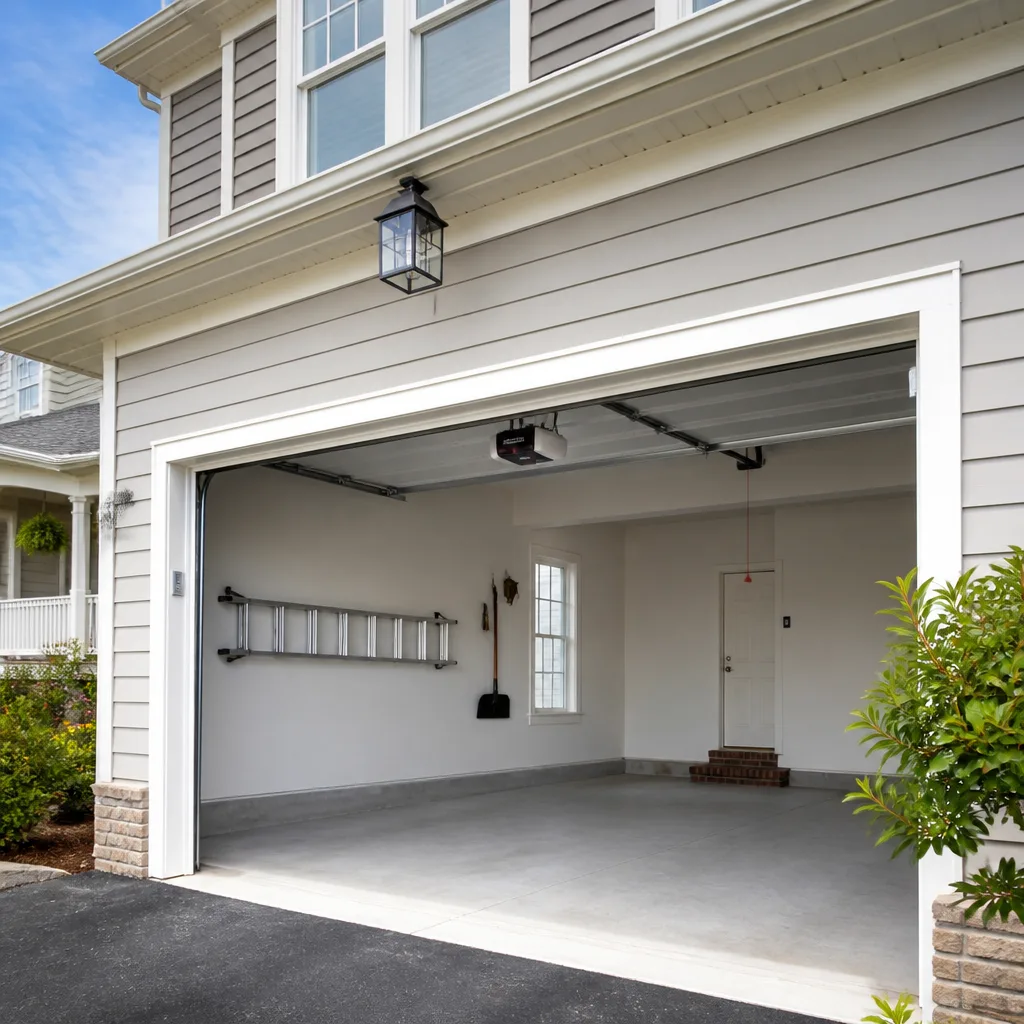
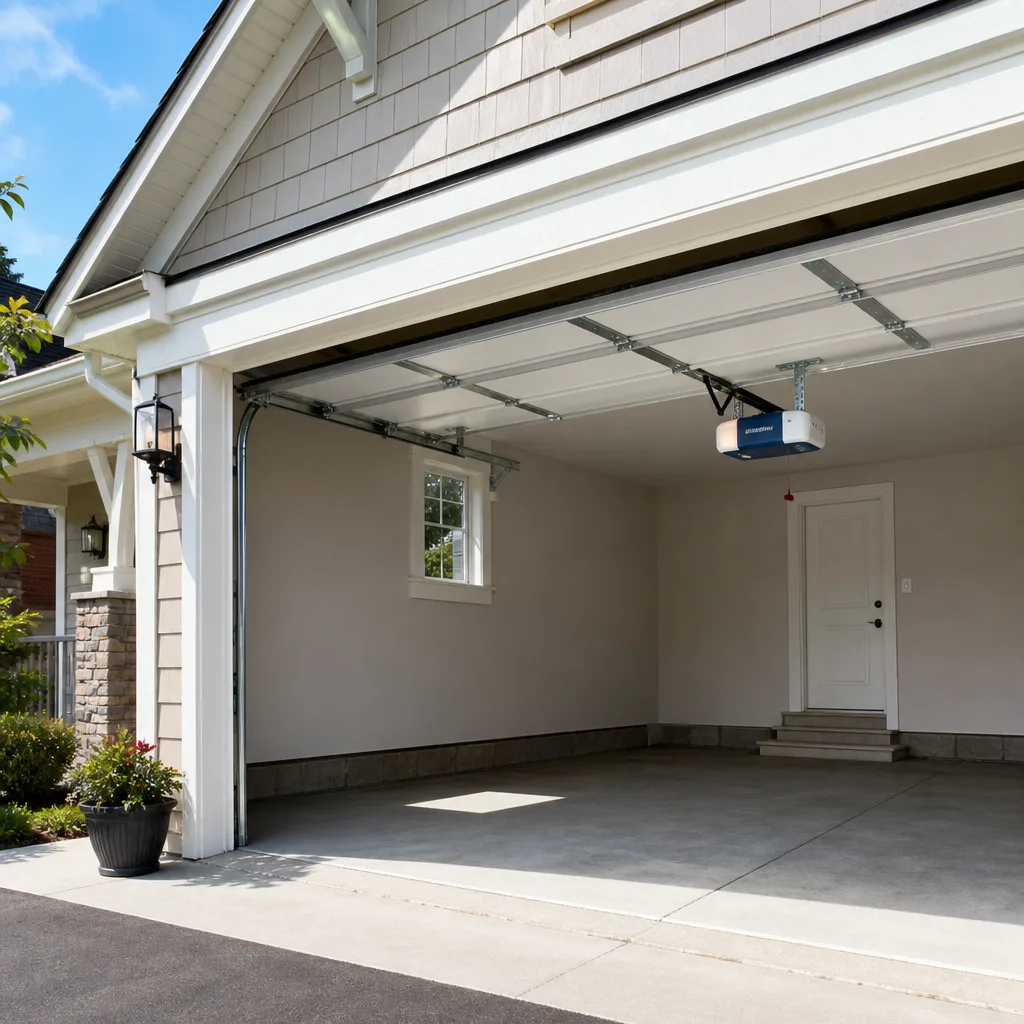
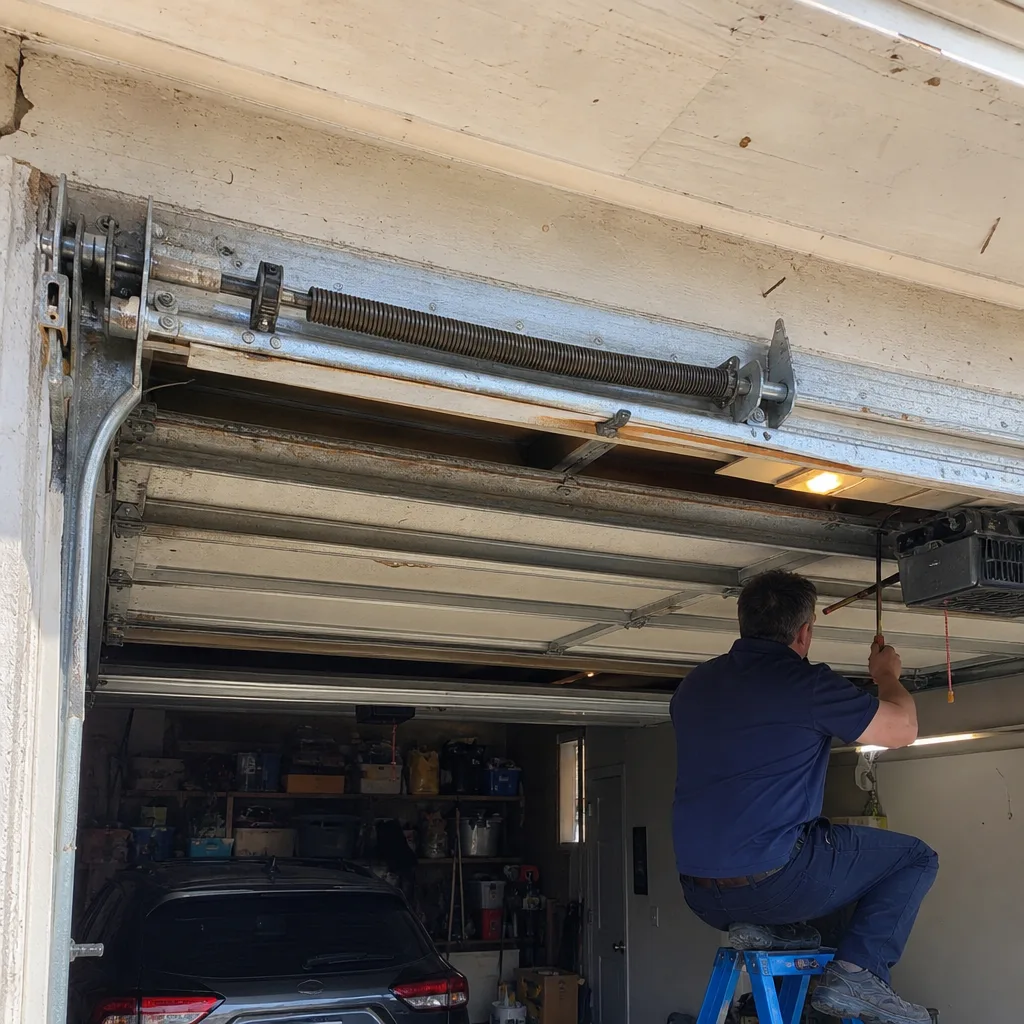 Before
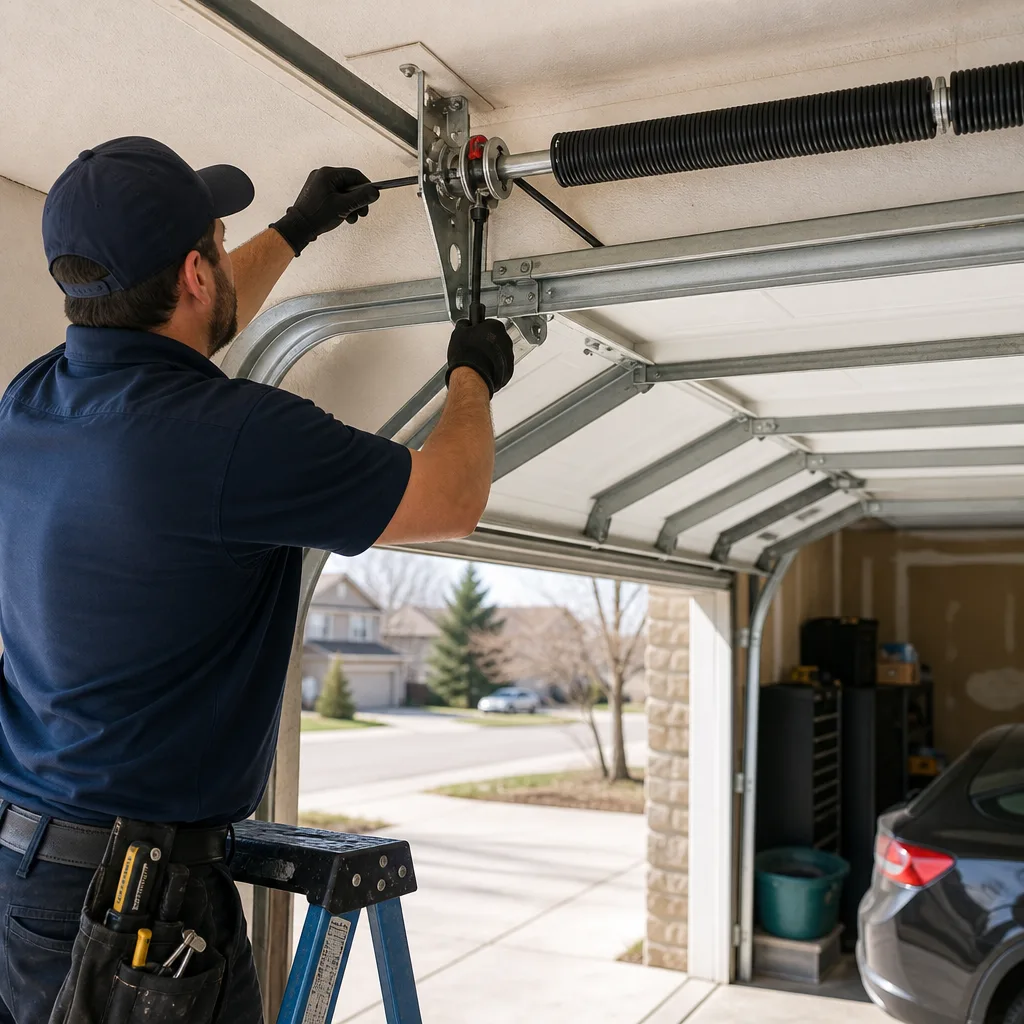 After
After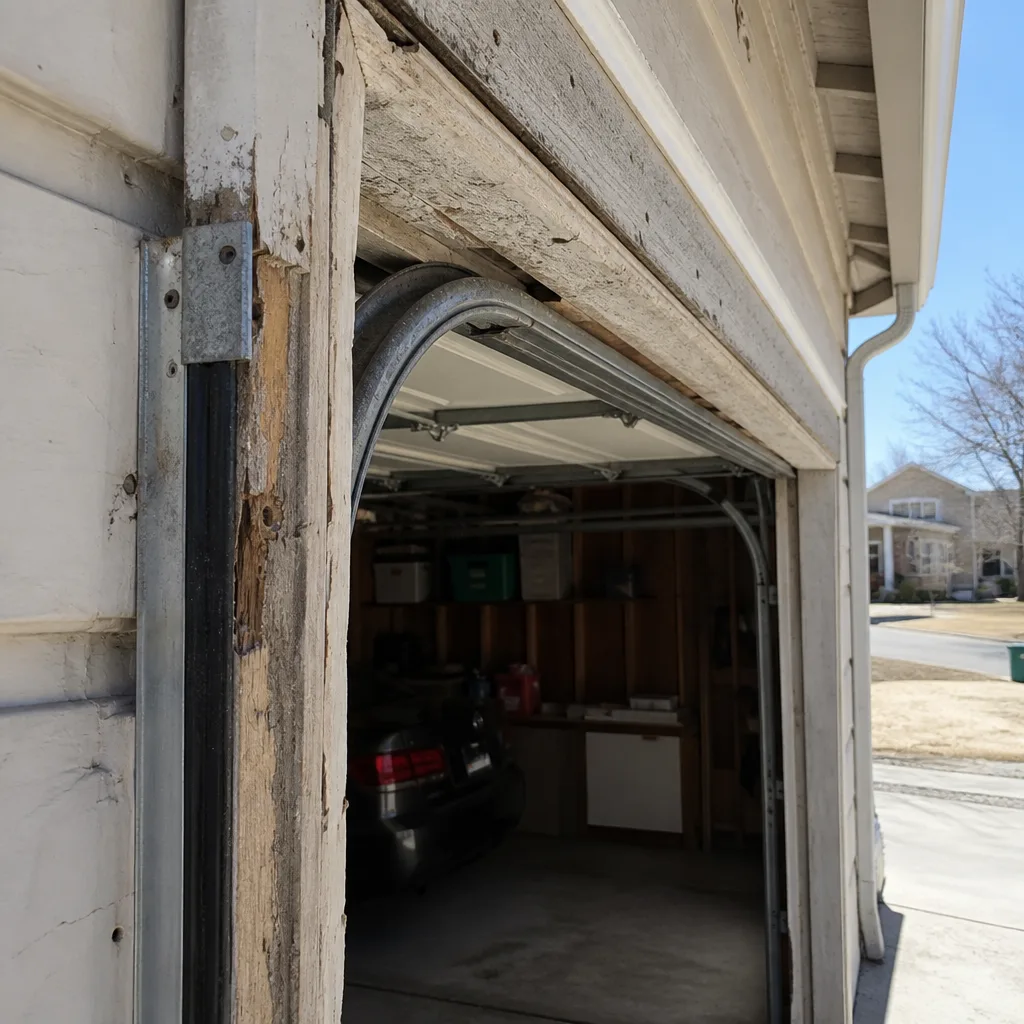 Before
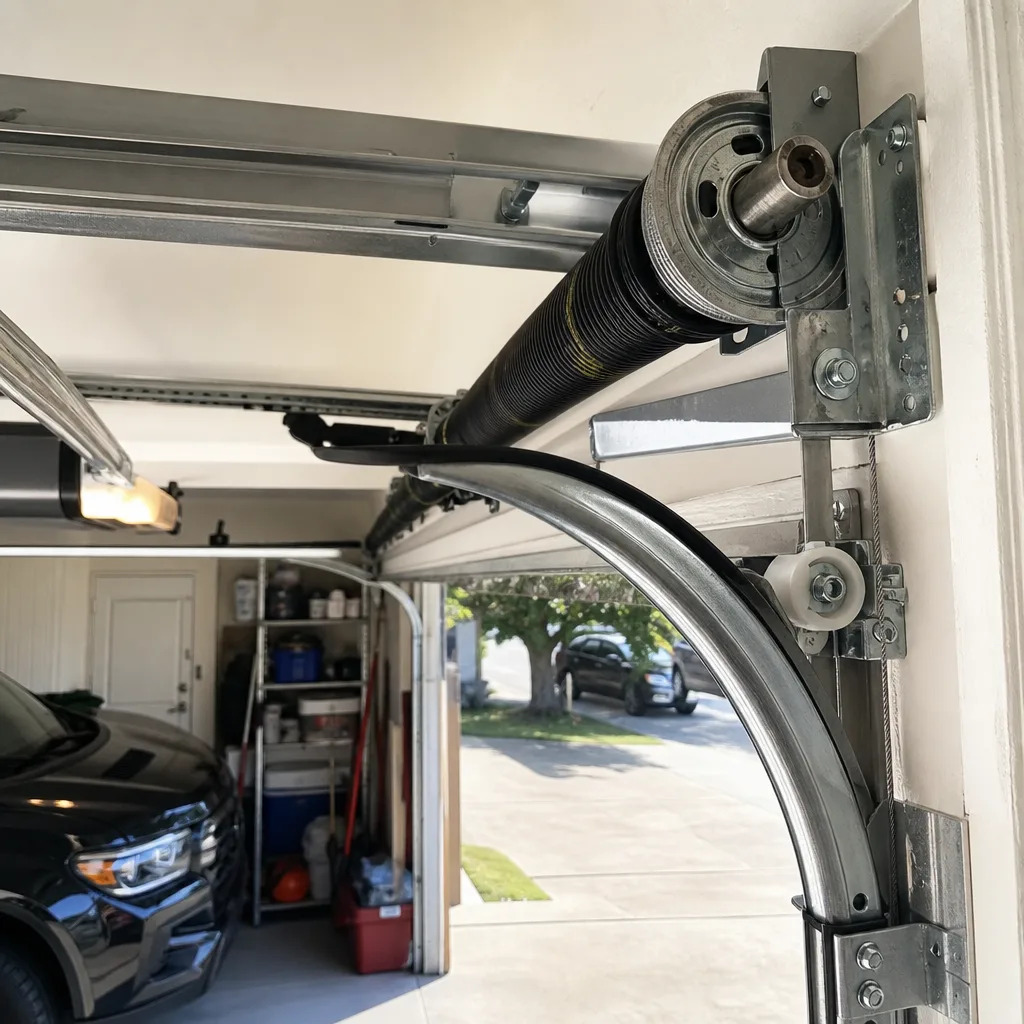 After
After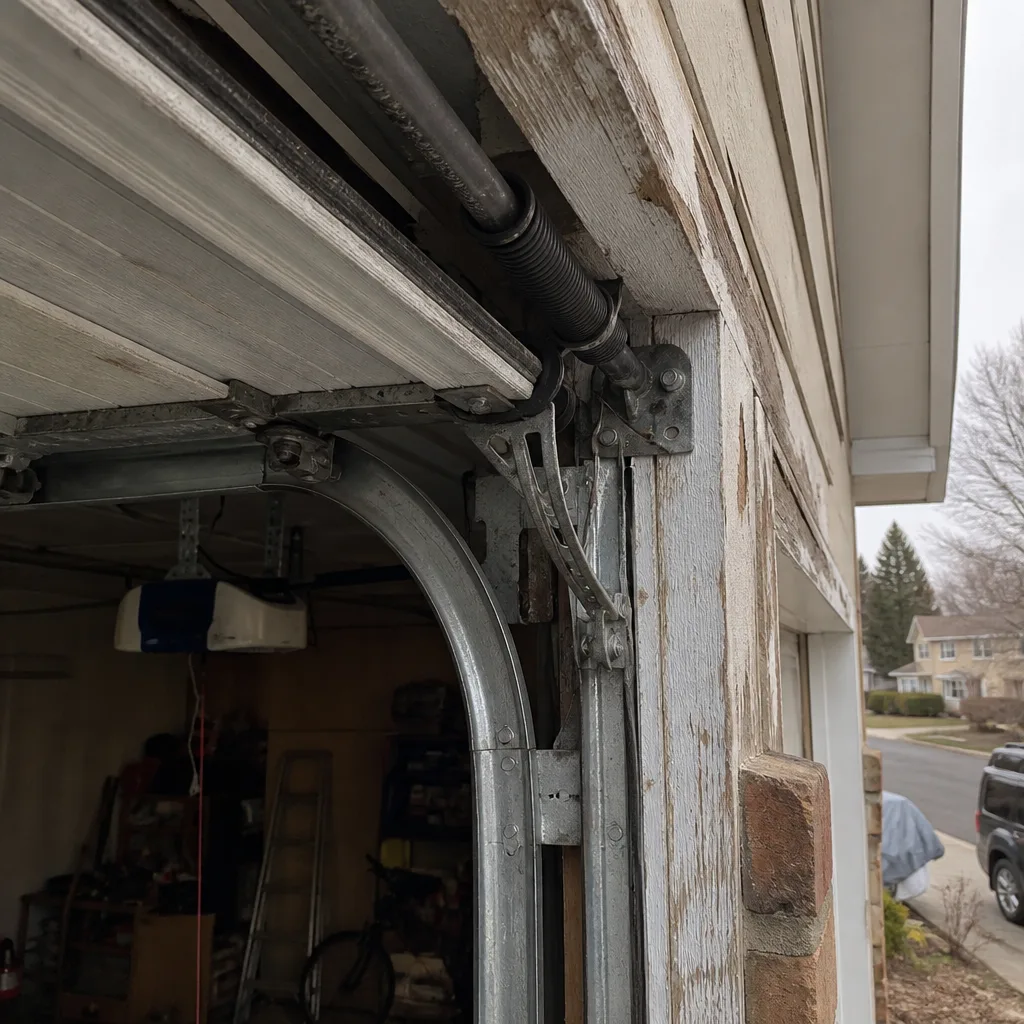 Before
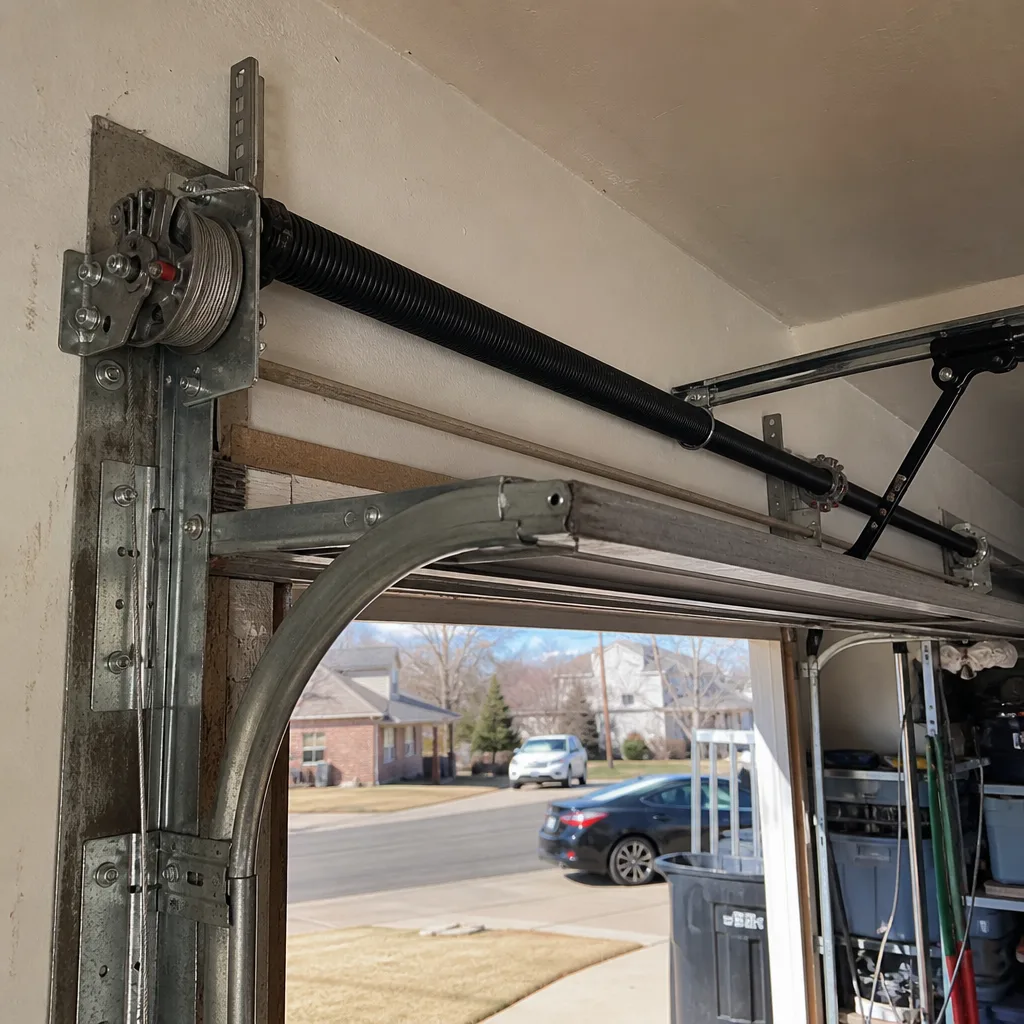 After
AfterThe Complete Guide to Garage Door in Thornton
A garage door in Thornton is not the same machine as a garage door in Chicago or Houston. We sit at roughly 5,400 feet, where a torsion spring rated for 10,000 cycles at sea level loses meaningful cycle life faster than the manufacturer’s label suggests. Most homeowners find this out when the spring snaps at 6:40 AM on a February morning, not before. This guide explains what actually fails on Front Range garage doors, why it fails, what it costs to fix in this market specifically, and how to buy a door that will survive Adams County wind, hail, and temperature swings without becoming a recurring invoice.
Quick Answer
A garage door in Thornton is best understood as four separate systems (panels, hardware, operator, and weatherseal) that wear unevenly because of altitude, diurnal temperature swings, and wind load. Most Thornton service calls involve the hardware system, specifically torsion springs that fail early due to temperature-cycling fatigue. Repair costs in this area typically run $145 to $380 for a spring replacement and $90 to $220 for most other repairs, while a full door replacement in Thornton generally lands between $1,400 and $4,200 depending on size, insulation, and wind-load rating-see our Garage Door Cost Breakdown: The Thornton Homeowner’s Reference for 2026 for detailed pricing.
Table of Contents
- The Thornton Problem: Altitude and Temperature Swing
- The Four Subsystems of a Garage Door
- Choosing a Door for Adams County: Wind, Weight, and Insulation
- Repair vs. Replace: The Three Factors That Actually Decide It
- What Documentation a Thornton Contractor Should Hand You Before Any Work
- Seasonal Maintenance for Front Range Garage Doors
- Signs Your Door Is About to Fail (Before It Does)
BeforeAfterThe Thornton Problem: Altitude and Temperature Swing
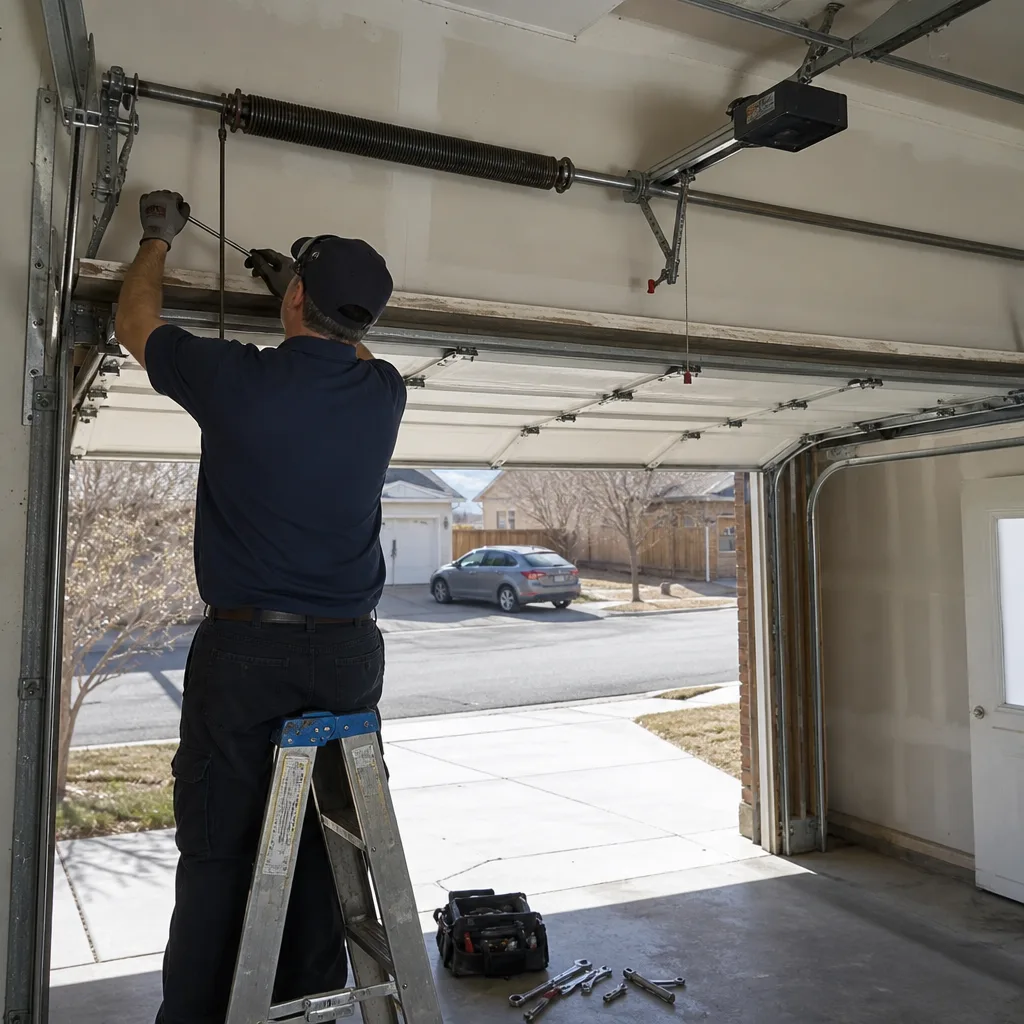
Thornton sits between 5,100 and 5,500 feet depending on the neighborhood, and that elevation changes how a garage door behaves. The air is thinner, which affects cooling on opener motors, but the real issue is thermal stress on metal components. A torsion spring stores mechanical energy by twisting steel. When outdoor temperatures swing 40°F in a single day, as they regularly do here in April and October, the steel expands and contracts at a different rate than the shaft it’s mounted on.
We see the result in spring failure patterns that don’t match manufacturer cycle charts. A spring rated for 10,000 cycles on the label might realistically deliver 7,000 to 8,000 in Thornton before fatigue cracking appears at the coil. This isn’t a manufacturing defect. It’s physics. The steel is being asked to hold tension through temperature swings that most of the country doesn’t experience.
What this means for a Thornton homeowner is straightforward: you should expect to replace torsion springs roughly every 7 to 10 years depending on how often you cycle the door. If you park both cars in the garage and use it for daily exits and entries, you’re running 4 to 6 cycles per day on average. That’s 1,500 to 2,200 cycles per year. The math catches up quickly.
Spring calibration in Thornton requires a different approach than low-altitude installation. A spring wound to standard tension at sea level will be under-wound here. The temperature swing causes the spring to lose tension slightly over time as the coils settle, and a technician who doesn’t account for this produces a door that feels heavy or drifts downward. When we install springs in Thornton, we wind to the manufacturer’s torque specification and then verify under loaded conditions, checking that the door balances at mid-height after a full cycle. That extra verification step matters more at altitude.
The Four Subsystems of a Garage Door
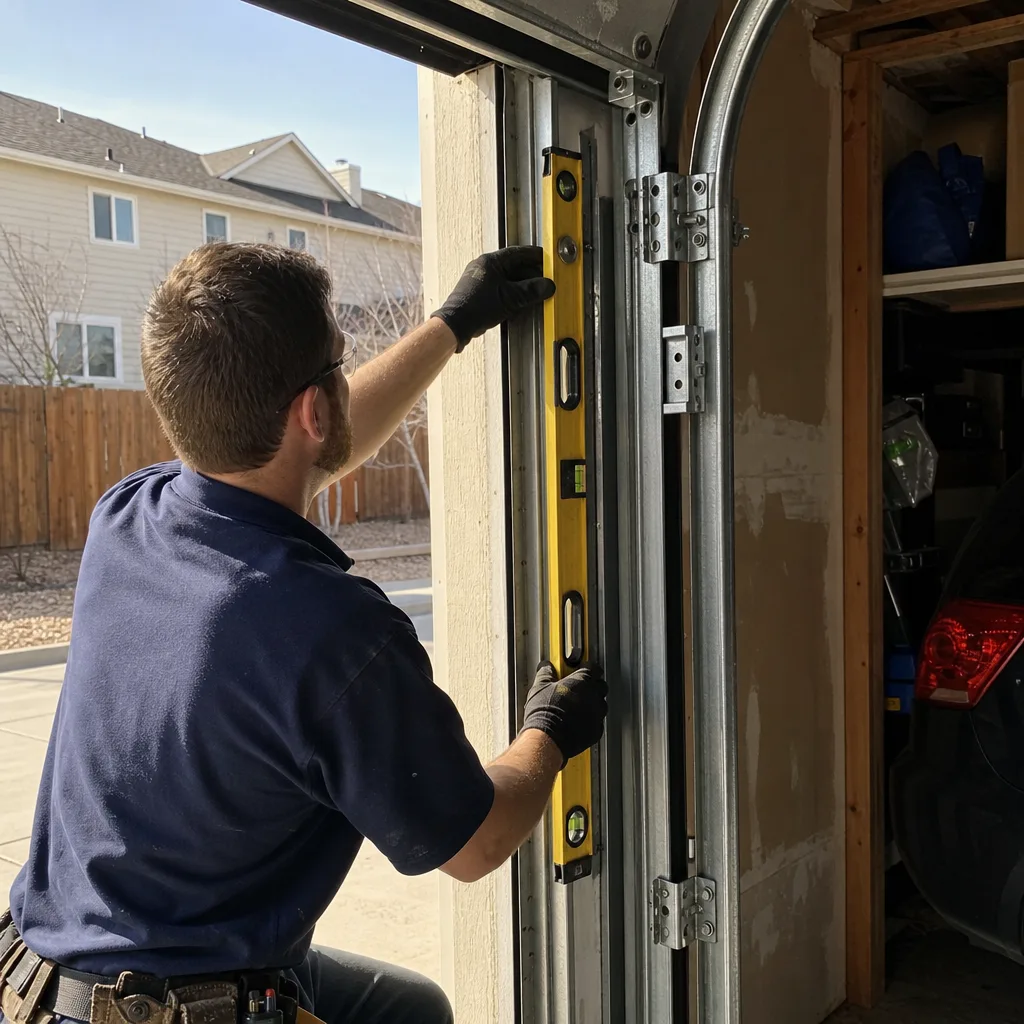
A garage door looks like a single object, but it’s more useful to think of it as four separate machines bolted together. They wear at different rates, fail in different ways, and cost different amounts to repair. Understanding this breakdown is what separates a homeowner who makes a good repair decision from one who replaces a $1,800 door because a $12 part wore out.
1. Panels: The Surface You See
Panels are the visible sections of the door, typically steel, aluminum, or wood composite. In Thornton, steel panels take a beating from hail and UV exposure at altitude. The sun here is more intense than at sea level, which fades paint and degrades weatherstripping adhesives faster. Hail dents are the most common panel complaint we see in Thornton, especially in neighborhoods east of I-25 where storms roll in off the plains. Panel damage is usually cosmetic, but a dent deep enough to compromise the panel’s structural rib reduces wind-load resistance and should be replaced.
2. Hardware: The System That Moves
Hardware includes torsion springs, extension springs, cables, rollers, hinges, brackets, and tracks. This is the system that accounts for the majority of service calls in the Front Range climate. Springs fatigue from temperature cycling. Rollers wear because dust and grit from our dry climate work their way into the bearings. Cables fray where they wrap around the drum. When a Thornton homeowner calls us about a door that won’t open or a loud bang in the middle of the night, it’s almost always a hardware failure, and it’s usually the spring.
3. Operator: The Motor and Logic Board
The operator is the motorized unit that opens and closes the door. In Thornton, operator failures tend to be electrical. Power surges during summer thunderstorms, accumulated dust on the logic board, and heat stress on the motor capacitor from garages that hit 110°F in July all contribute. The logic board is the brain of the unit, and when it fails, the door doesn’t respond to remotes or wall consoles. Operator lifespan in this area is typically 10 to 15 years for a quality unit like a LiftMaster or Chamberlain, less for builder-grade models.
4. Weatherseal: The Part That Protects Everything Else
Weatherseal is the rubber or vinyl stripping along the bottom, sides, and top of the door. Most homeowners ignore it until they see daylight around the door edges or find dirt and water on the garage floor after a storm. In Thornton, weatherseal degrades faster than in humid climates because the air is dry and UV exposure is intense. Cracked, brittle weatherseal lets dust, snowmelt, and cold air into the garage, which accelerates wear on everything else. It’s the cheapest component to replace and the one most often neglected.
Choosing a Door for Adams County: Wind, Weight, and Insulation
When you’re shopping for a new garage door in Thornton, brand comparison charts are the least useful thing you can study. What matters is whether the door is engineered for the conditions it will live in here. That means three things: wind-load rating, insulation value, and weight relative to your spring configuration.
Wind-Load Rating and Adams County Wind Data
Adams County sees sustained winds of 25 to 35 mph regularly during spring and fall fronts, with gusts over 60 mph during severe weather. A garage door is typically the largest unsupported opening in a home, and wind pressure against a 16-foot-wide door is measured in thousands of pounds of force during a gust. Building code requires garage doors in this area to meet specific wind-load ratings based on the structure’s exposure category, and Garage Door Permits, Codes & Inspections in CO: What You Need to Know explains how to navigate those requirements. When you buy a door, ask for the wind-load rating in pounds per square foot, usually stated as design pressure in psf. A door rated for 20 psf or higher is appropriate for most Thornton neighborhoods. Anything less and you’re asking the door to do something it wasn’t engineered for.
The door’s weight matters too, but not in the way most people assume. Heavier doors with insulation and thick steel gauge are more stable in wind, but they also put more demand on the springs and opener. A 16×7 insulated steel door might weigh 200 to 260 pounds. A comparable uninsulated door weighs 140 to 180. The heavier door needs stronger springs, and the opener needs a higher horsepower rating to move it smoothly. When we install doors in Thornton, we match the spring pair to the actual measured weight of the door panel assembly on a scale, not to the manufacturer’s listed weight, because manufacturing tolerances add up.
Insulation: R-Value in a High-Sun Climate
Garage door insulation is sold as an R-value, which measures thermal resistance. The part most people miss is that in Thornton, insulation matters as much for summer as for winter. An uninsulated garage on the west side of a Thornton home can hit 120°F on a July afternoon, and that heat migrates into whatever’s on the other side of the garage wall. If you have a bedroom above the garage, an insulated door with an R-value of 9 to 12 makes a measurable difference in how hard your AC works.
The standard options are:
- Polystyrene core (R-6 to R-9): Rigid foam board inside the panel. The baseline insulated option. Good for most use cases.
- Polyurethane core (R-12 to R-18): Injected, expanding foam that fills the panel completely. Better thermal performance and structural rigidity. The right choice if the garage is heated or has living space above.
- Uninsulated (no R-value): Single-layer steel. Cheapest, loudest, least protected. We don’t recommend it for Thornton homes.
Brands like Clopay and Amarr make solid insulated doors with polyurethane cores in the R-12 range that hold up well in this climate. Raynor makes a steel-backed insulated line that we’ve installed with good results in Thornton. The brand matters less than the core material and the wind-load rating.
Repair vs. Replace: The Three Factors That Actually Decide It
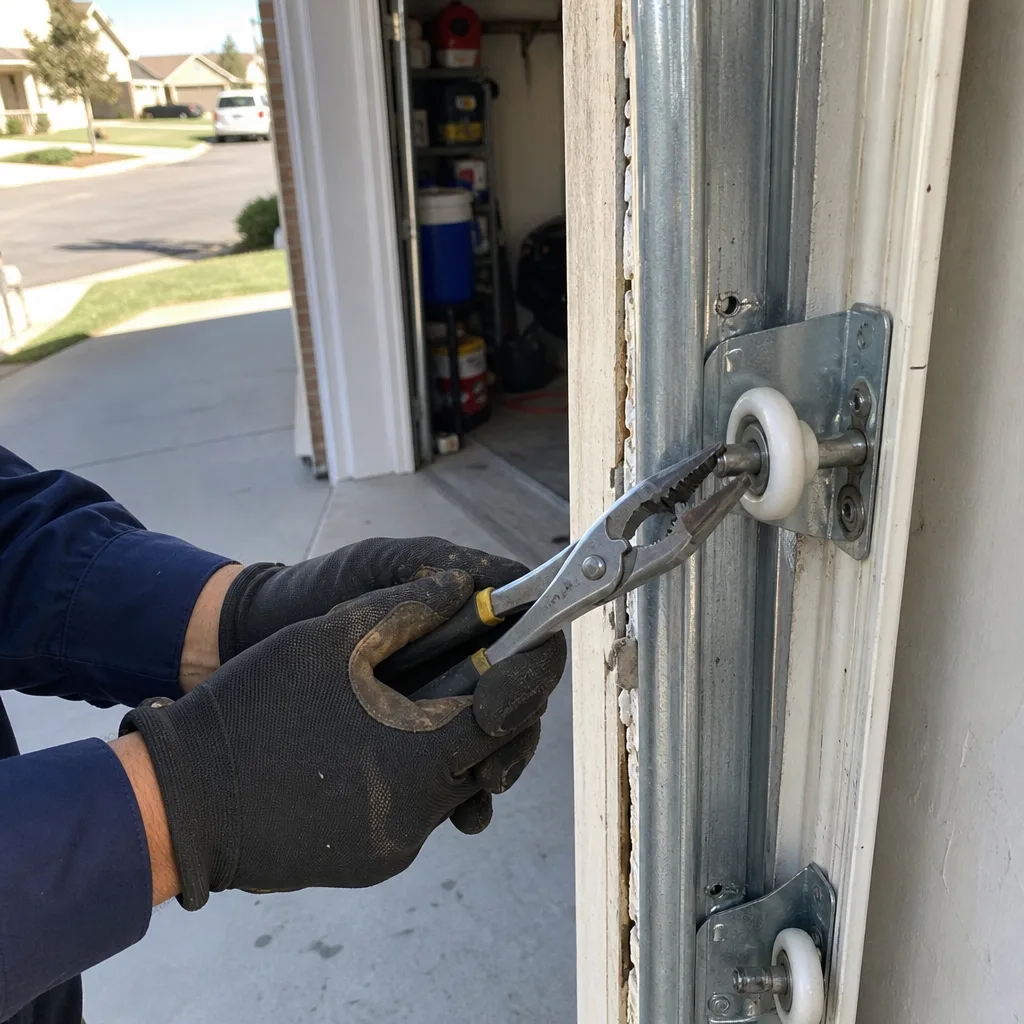
The DIY vs Professional Garage Door: The Thornton Homeowner’s Decision Guide covers this in depth, but the repair versus replacement decision is where contractors make their margin, which means it’s where you should be most skeptical of advice. The honest answer depends on three measurable things, not on how the door looks or whether a salesperson thinks it’s ‘about time.’
- Panel damage depth. If a panel is dented but the structural rib is intact, the door’s wind-load resistance is unimpaired and replacement is a choice, not a necessity. If a dent crosses a rib or the panel is cracked through, that section has lost structural integrity and should be replaced. Cosmetic dents can be pushed out or lived with; structural damage compounds over time.
- Spring count and configuration. A door with a single spring has one point of failure and will have to be rebalanced when that spring goes. A door with a two-spring system wears more evenly and can be a repair candidate even at 12 to 15 years old. If the door has had multiple spring replacements in five years, something else is wrong (usually the spring rating doesn’t match the door weight) and you should address that before deciding either way.
- Operator age and compatibility. If the opener is 12 to 15 years old and the door is the same age, you’re looking at two major component replacements within a few years of each other. It’s often more economical to replace both at once when the design and rail compatibility matter. If the opener is newer, a door repair or partial panel replacement is usually the better financial move.
The decision hinges on documentation, not opinion. If a contractor can’t show you the measured door weight, the spring wire diameter, the spring coil count, and the panel damage compared to the structural rib, they haven’t given you enough to make an informed call. We photograph the failed component and hand you the measurement before we quote anything. That’s not a sales tactic; it’s so you can verify what we’re telling you.
For most Thornton homeowners, a repair makes sense when the panels are structurally sound and the springs and operator are under 10 years old. Replacement makes sense when panel damage crosses structural ribs, when the door is uninsulated in a west-facing garage, or when the user wants to upgrade to a higher wind-load rating ahead of storm season.
What Documentation a Thornton Contractor Should Hand You Before Any Work
This section exists because the garage door industry has a documentation problem. Most contractors quote verbally, work without a written scope, and leave the homeowner with a receipt and a vague sense that something got fixed. That’s the system we built Servo to avoid, and it’s the standard you should hold any contractor to, in Thornton or anywhere else.
Before any work begins, you should receive:
- A written, itemized price. Not a verbal range, not ‘it depends,’ not ‘call for a quote.’ A flat dollar figure for parts and labor, in writing. Clause 1 of The Haven Standard requires a flat, written price and written scope before any work starts. If a contractor won’t put it in writing, that’s your signal to find another one.
- A written scope of work. What exactly is being repaired or replaced, which parts, which brands, and what happens if something unexpected is found. This is different from an estimate. It’s a defined, agreed-upon job description.
- A photographed component assessment. If a spring is broken, you should see a photo of the broken spring before you’re asked to pay for a replacement. This is now Clause 4 of The Haven Standard, and it traces back to the founding rule Servo was built on in 2015: the customer sees the failed part before anyone quotes a replacement.
- A documented photo record when the work is done. You should leave the job with photos of what was found, what was replaced, and what the finished work looks like. Not optional, not on request, not ‘we can send those if you want.’
- A written warranty. The length of the labor warranty, the manufacturer’s warranty on parts, and a name to call if something goes wrong. Not a handshake. A document.
If you’re comparing contractors in Thornton and one of them hands you this package and the other one quotes you over the phone and says they’ll ‘take care of you,’ you’re not comparing two versions of the same thing. You’re comparing a system with a promise.
Seasonal Maintenance for Front Range Garage Doors
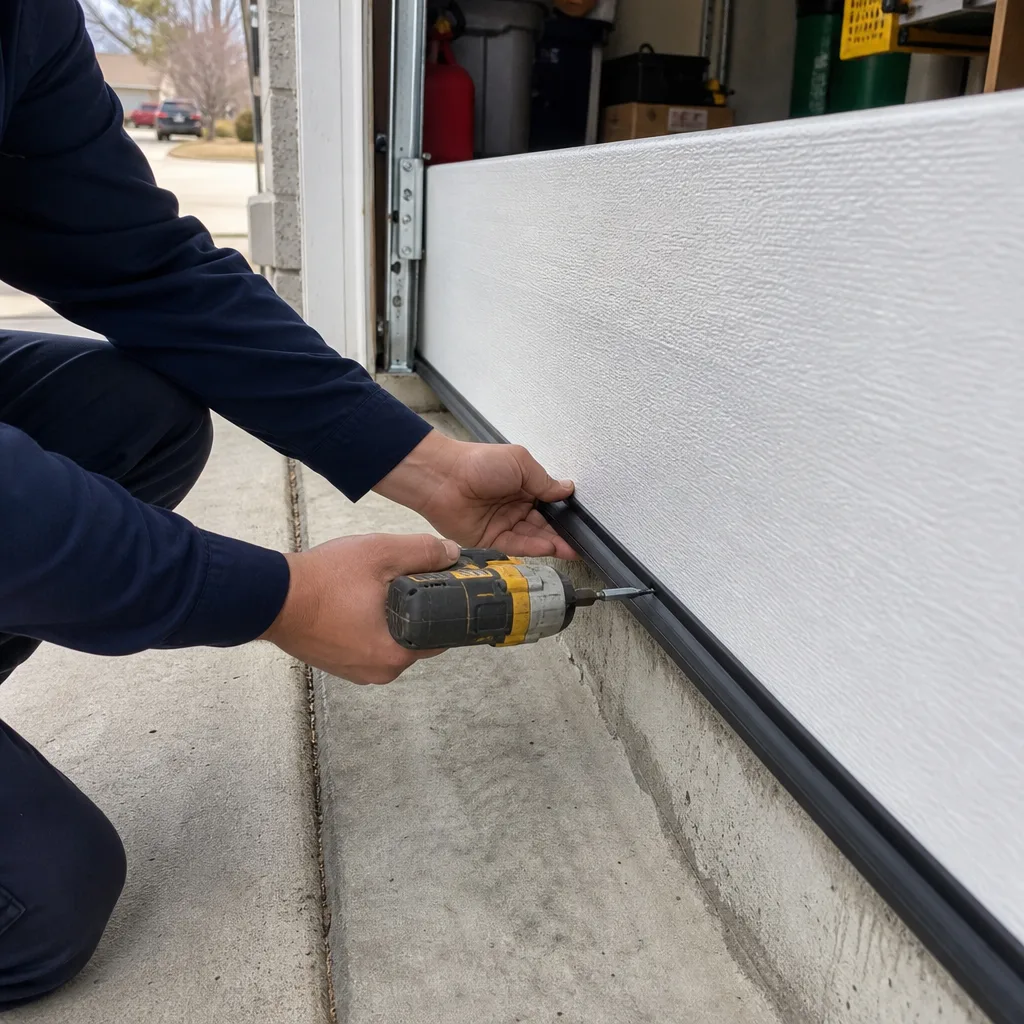
A garage door in Thornton wants two maintenance checks per year. The worst thing you can do is wait until it fails, because our climate aggravates small problems into large ones quickly. A slightly dry roller becomes a scored track after a summer of dust. A small crack in weatherseal becomes a frozen seal in January. None of this is hard to catch if you look.
Spring (April-May)
- Inspect the weatherseal along the bottom and sides. Replace if cracked or brittle, which happens faster here than most of the country because our UV is intense and our air is dry.
- Lubricate rollers, hinges, and springs with a silicone-based garage door lubricant. Do not use WD-40; it displaces the lubricant that’s already there and dries out.
- Check the balance. Disconnect the opener (pull the red release handle) and lift the door manually. It should stay at mid-height without drifting up or down. If it drifts, the springs are losing tension and should be checked.
- Clear the tracks. Dust and pollen accumulate in the track channels, and our spring winds blow grit into places it shouldn’t go.
Fall (October-November)
- Test the auto-reverse safety feature. Place a 2×4 on the ground under the door and close it. The door should reverse when it hits the board. If it doesn’t, the opener’s limit switch or safety sensors need attention.
- Inspect cables for fraying where they wrap around the drum. If you see individual wire strands separating, call a professional. Cables under tension are dangerous to handle.
- Check weatherseal again. A torn bottom seal in winter lets cold air and snowmelt into the garage, which freezes the seal to the concrete and stresses the opener.
- Test the opener’s force settings. The door should reverse with light resistance when closing. A properly set force limit means the door stops instead of crushing.
Two checks a year, 20 minutes each. The alternative is waiting for a failure and paying emergency rates in February, which in Thornton means cold hands and a bigger invoice.
Signs Your Door Is About to Fail (Before It Does)
Most garage door failures in Thornton give warning signs first. The homeowner who catches them saves a service call. The homeowner who ignores them gets a broken spring at 6 AM and a door that won’t open. Here’s what to watch for.
- The door feels heavy when you operate it manually. Springs are losing tension. A properly balanced door takes about 10 to 15 pounds of lift force when disengaged from the opener. If yours feels closer to 40 or 50, the springs are working harder than they should, which shortens their life.
- The door opens slower than it used to. This often indicates an opener motor or capacitor wearing out, or a balance problem forcing the opener to work harder. Either way, it’s progressive.
- The door vibrates or shakes on the way up. Rollers are worn, tracks are misaligned, or the door is out of balance. Vibration accelerates wear on every hinge and bracket, so it compounds quickly.
- You see a gap in the spring’s coil, or the spring looks ‘stretched.’ A torsion spring under proper tension has tight, uniform coils. A visible gap means one side of the spring has lost tension or is starting to fatigue crack. This is the final warning before it snaps.
- The door reverses when closing even with nothing in the way. Usually a misaligned photo eye sensor or a limit switch setting problem. Annoying, and also a sign that the safety system is not functioning correctly.
- You hear grinding or squealing that was never there before. Rolling element bearings are failing. Once a roller seizes, it drags against the track instead of rolling, and the track gets scored, which means the track eventually needs replacement too.
None of these signs require immediate action in the sense of a same-day emergency. But each one is cheaper to address before it cascades. A $40 roller replacement becomes a $400 track replacement if ignored for a year. Spring tension loss becomes a full spring replacement if ignored past the fatigue point.
What Thornton Homeowners Pay (And Why the Range Exists)
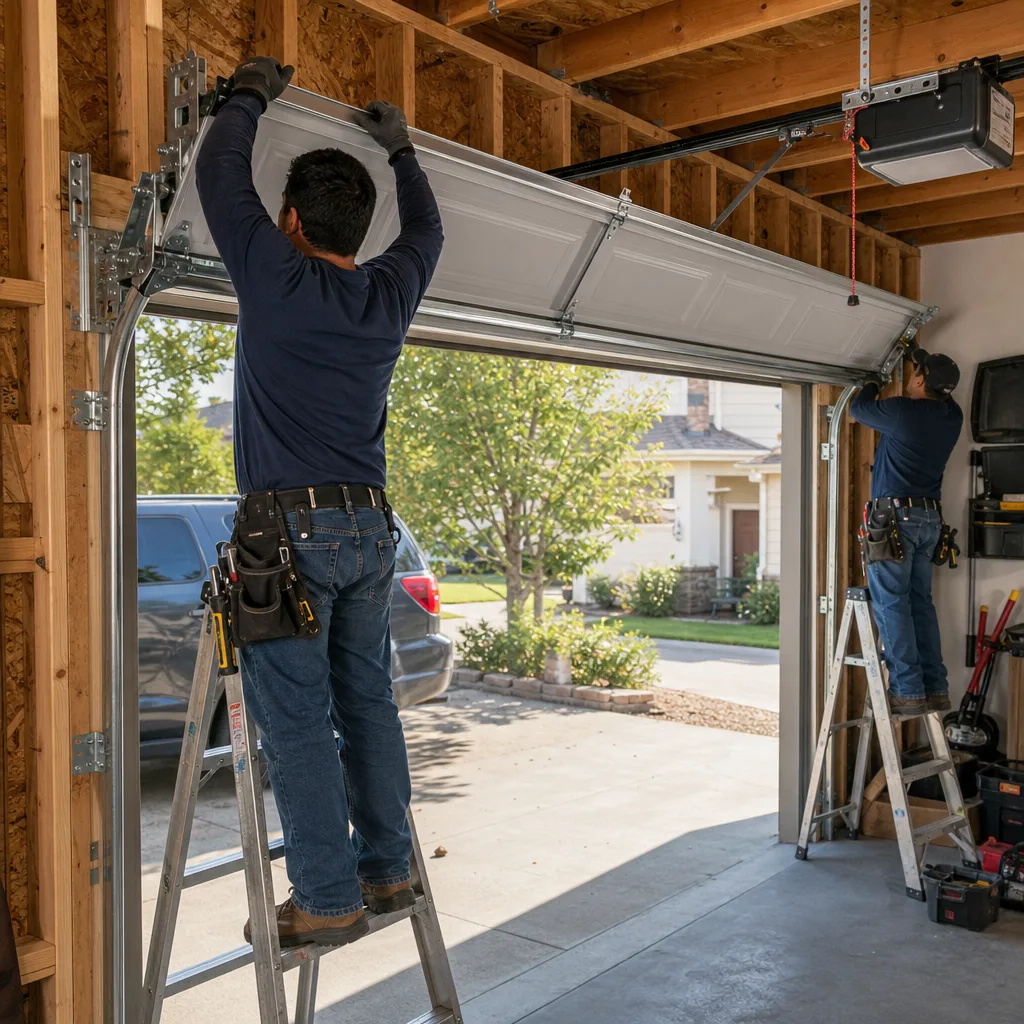
Pricing in the Denver metro area varies less by city and more by the specifics of the job. In Thornton, you’re looking at these general ranges for common repairs as of 2026:
- Torsion spring replacement (one spring): $145 to $280
- Torsion spring replacement (two springs): $280 to $420
- Roller replacement (all rollers): $90 to $180
- Cable replacement: $110 to $190
- Opener replacement (unit only, not including rail): $250 to $500
- Full door replacement (16×7 insulated): $1,400 to $4,200 depending on insulation, steel gauge, and wind-load rating
The range exists because spring wire diameter, coil count, door weight, and opener brand all factor into the final price. A 16×7 insulated door from Raynor with a polyurethane core and high wind-load rating costs more than a budget single-layer steel door from a builder supply, and it should.
What you should never encounter is a price that changes after the work starts. The price quoted should be the price on the invoice, full stop. If a contractor finds something unexpected, the new work should be quoted in writing before it’s done. That’s not an unreasonable standard. It’s the minimum.
Servo Garage Doors Thornton has operated under this model since 2015, and every job closes with a documented photo record of what was found and what was done. It’s the system we offer because it’s the system we’d want as homeowners.
Common Mistakes to Avoid
- Buying a door based on brand name instead of wind-load rating. A well-known brand selling an uninsulated, low-psf-rated door will perform worse in an Adams County wind event than a lesser-known brand selling a properly rated, insulated panel. Shop the spec, not the logo.
- Ignoring spring balance because ‘the opener handles it.’ The opener is a motor, not a lifting mechanism. When the springs weaken, the opener carries the load, which burns out the motor prematurely. A $120 spring check is cheaper than a $450 opener replacement.
- Lubricating with WD-40 or grease. Both attract dust, which in our dry climate becomes an abrasive paste that eats rollers and hinges. Use silicone spray only. It’s a $12 item that prevents $300 in wear.
- Leaving a dented panel thinking it’s ‘just cosmetic.’ In a high-wind event, a structurally compromised panel fails first. If the dent crosses a rib or the panel is cracked, replace it before storm season, not after.
- Hiring a contractor who quotes over the phone and won’t put numbers in writing. A verbal quote is not a scope. If you don’t have a written price before work starts, you have a blank check with someone else’s name on it.
- Skipping the auto-reverse test. It takes 30 seconds, and it’s the single most important safety feature on the entire system. Federal law has required auto-reverse on all openers since 1993, and units do fail. Test it twice a year.
- Assuming a ‘lifetime warranty’ covers labor. Most ‘lifetime’ warranties in this industry cover the part only, not the labor to install it. Read the warranty language before you buy.
When to Call a Professional
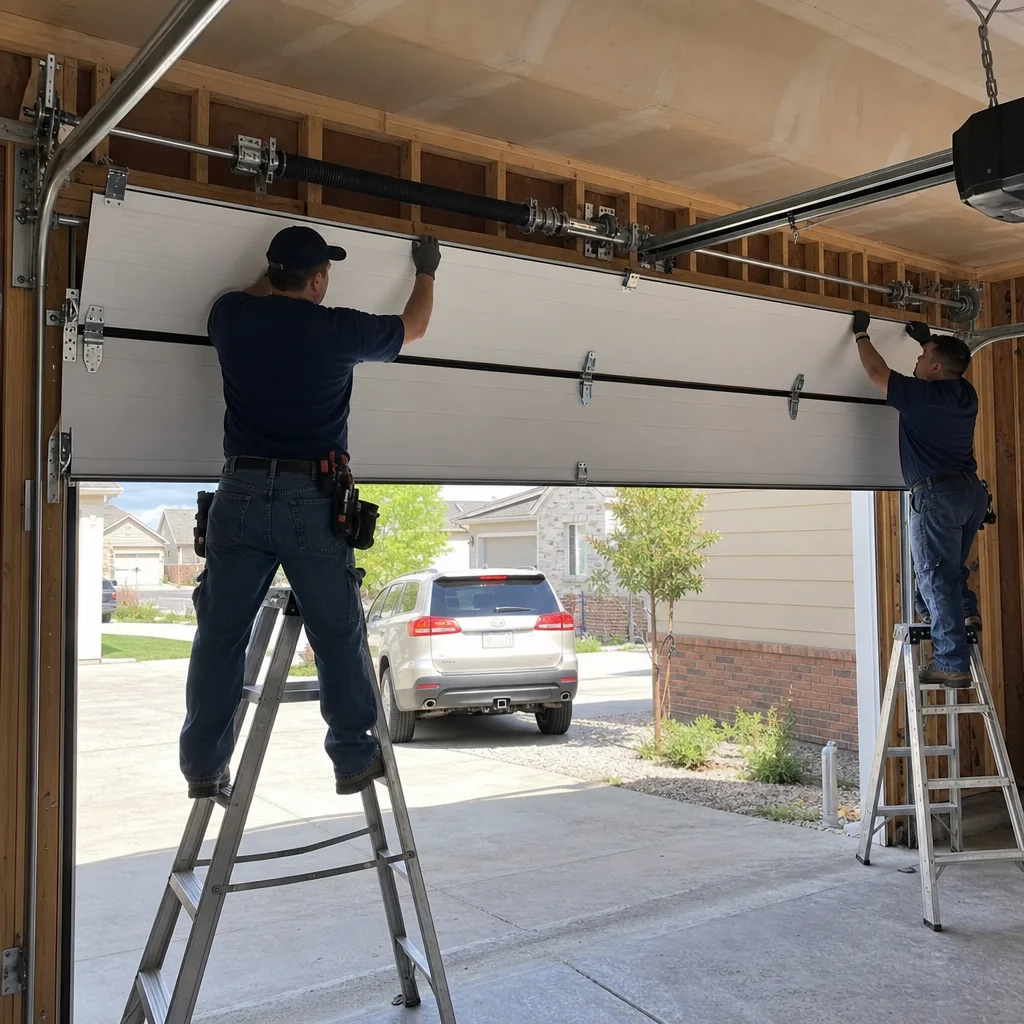
There are times when calling a professional is not a preference but a necessity. Torsion springs are under hundreds of pounds of torque, and the metal cone at the end of a spring carries enough stored energy to break bone if it lets go while you’re working on it. Cables under tension can sever fingers. Any work involving the spring system, the cable system, or the tracks should be handled by someone with the training and the tools to do it safely. Same for opener electrical work, which involves line voltage and can damage the logic board if wired incorrectly.
If your spring is broken and you’re in Thornton, call Servo Garage Doors Thornton at (720) 575-1024. Live phone coverage 24/7, including emergency calls, and a named technician with an on-the-way text. Or start with the Garage Door Repair in Thornton page for a breakdown of what we fix and what it costs in this market.
Frequently Asked Questions
Thornton sits at roughly 5,400 feet, and the daily temperature swings here (often 40°F in a single day) cause the spring steel to expand and contract repeatedly against the shaft it’s mounted on. That thermal cycling fatigues the metal faster than the manufacturer’s 10,000-cycle rating predicts. Expect 7 to 10 years of usable spring life in this climate, not the optimistic label number.
Most Thornton repair jobs run between $145 and $380 for common fixes like spring, cable, and roller replacement. Opener replacement typically runs $250 to $500 for the unit. A full door replacement in Thornton ranges from $1,400 to $4,200 depending on size, insulation, and wind-load rating. Call (720) 575-1024 for a written price on your specific job. Estimates are free, and the price is quoted and agreed before any work starts.
Repairs like spring replacement and roller jobs are usually same-day work. Full door installations are measured, ordered, and scheduled, so same-day installation isn’t realistic. You can typically get a free measure and a written price within a day or two, and installation within a week in most cases. For a detailed look at how installation works, see Garage Door Installation in Thornton.
Look for a design pressure rating of 20 psf or higher for most Thornton neighborhoods. This is the rating that tells you how much wind force the door is engineered to withstand. If the door will face open exposure (no other structures blocking wind), go higher. The manufacturer’s wind-load certification should be available on request.
Sometimes. Issues with the safety sensors, limit switches, remotes, or wall console often involve a repair or reprogramming rather than a full replacement. Problems with the logic board or motor usually mean replacement. Expect to pay $90 to $220 for opener repairs in Thornton. For a full breakdown, see Garage Door Opener Repair & Installation in Thornton.
No. The price is quoted in writing before any work starts, and if something unexpected is found, the additional work is quoted in writing before it’s done. You never go from an estimate to an invoice without seeing the new number and agreeing to it first. That’s Clause 1 of The Haven Standard, and it applies to every job we do in Thornton.
We service all eight major garage door brands: LiftMaster, Chamberlain, Genie, Clopay, Amarr, Wayne Dalton, Craftsman, and Raynor. We stock parts for these brands on service trucks, which means most repairs in Thornton are completed in a single visit.
The Bottom Line
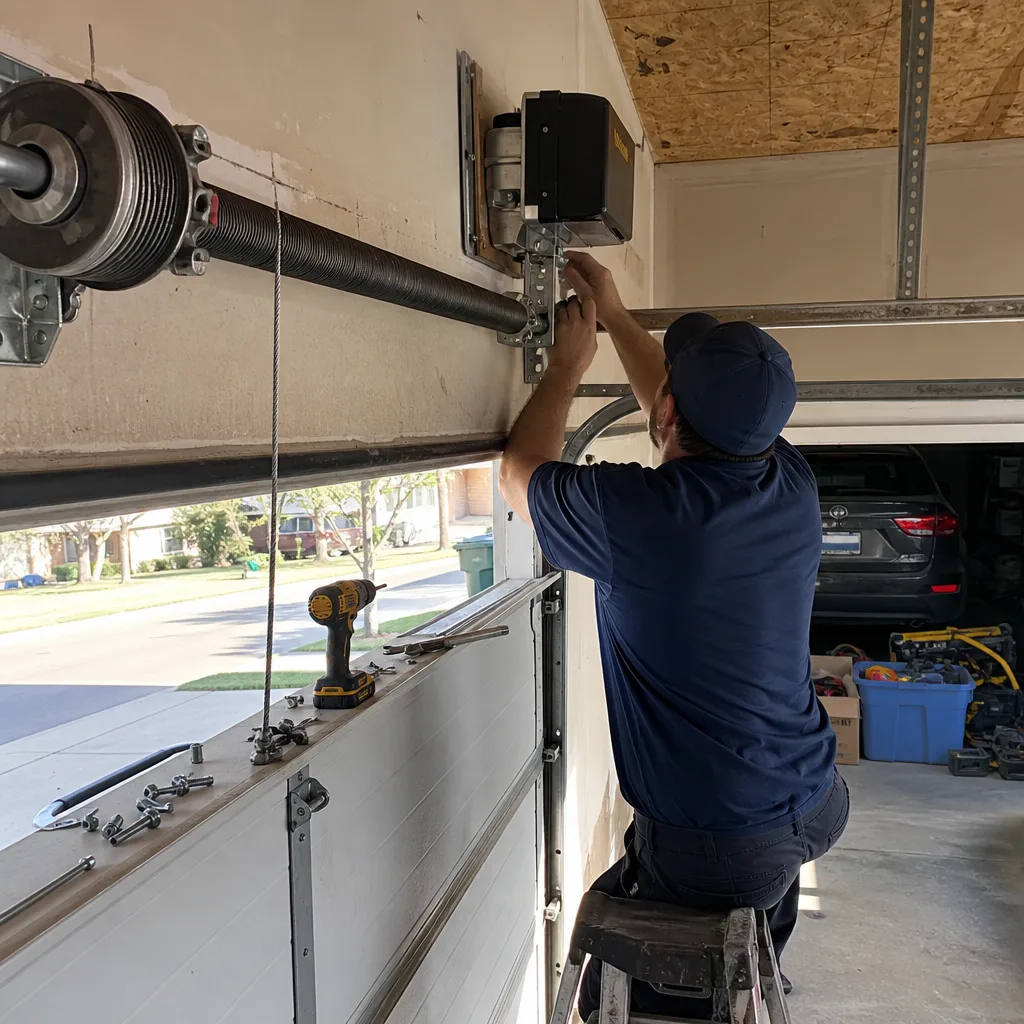
A garage door in Thornton is a system that fails in predictable ways because of altitude, temperature swing, and wind load. The springs fatigue early, the weatherseal degrades fast, and wind-load rating matters more than brand name. None of this is difficult to manage if you understand what you’re looking at and what documentation a good contractor should provide, and you can find more guides & resources on our blog to help you stay informed. The four subsystems, the three repair versus replacement factors, and the two seasonal maintenance checks are the whole job. Get those right and the door works for a decade. Get them wrong and you’re on a first-name basis with a repair technician. And as a general rule: if a contractor won’t show you the failed part and quote a written price before touching anything, find one who will.
For repairs, replacements, openers, or a second opinion on an existing estimate, call Servo Garage Doors Thornton at (720) 575-1024. Free estimates in Thornton, written price before work starts, and a documented photo record when we leave.
Written by Marcus Deller, Owner at Servo Garage Doors Thornton, serving Thornton since 2015.